
The End of Linear Marketing Funnels
As we approach 2030, the marketing landscape is undergoing a seismic shift. The traditional funnel model, once the cornerstone of marketing strategy, is rapidly becoming obsolete. With the advent of AI-powered marketing, businesses are now forced to rethink their approaches to customer engagement and conversion. HubSpot Marketing highlights this transformation with the introduction of loop marketing tactics, a four-stage framework designed to leverage AI for continuous growth.
The Rise of Loop Marketing
Loop marketing represents a departure from the static, linear paths that funnels assume. In a world where consumer behavior is increasingly fragmented, buyers no longer follow predictable journeys. Instead, they navigate multiple channels, often influenced by AI-driven insights before making a purchase decision. This shift necessitates a more dynamic approach, one that loop marketing provides.
Four Stages of Loop Marketing
Loop marketing consists of four key stages: Express, Tailor, Amplify, and Evolve. Each stage is designed to build upon the last, creating a self-reinforcing cycle of learning and optimization. This cyclical nature allows businesses to adapt quickly to changing consumer preferences and market conditions.
Stage 1: Express
The first stage focuses on defining a brand's identity through the creation of an Ideal Customer Profile (ICP) and a style guide. This foundational work ensures that all subsequent marketing efforts resonate authentically with the target audience.
Stage 2: Tailor
Next, businesses must personalize their messaging. By leveraging enriched data and AI tools, marketers can create tailored content that speaks directly to the unique needs of different customer segments. This level of personalization is critical in an era where generic messaging fails to capture attention.
Stage 3: Amplify
The Amplify stage emphasizes expanding reach across diverse channels. With AI search engines and social media platforms dominating consumer discovery, brands must optimize their presence where their audience is most active. This includes leveraging video content on platforms like TikTok and YouTube, as well as engaging in community discussions on forums and professional networks.
Stage 4: Evolve
Finally, the Evolve stage allows for continuous optimization. Unlike traditional funnels that operate on quarterly cycles, loop marketing enables real-time performance monitoring and rapid experimentation. This agility not only improves campaign effectiveness but also enhances the overall customer experience.
2030 Outlook: The Future of Marketing
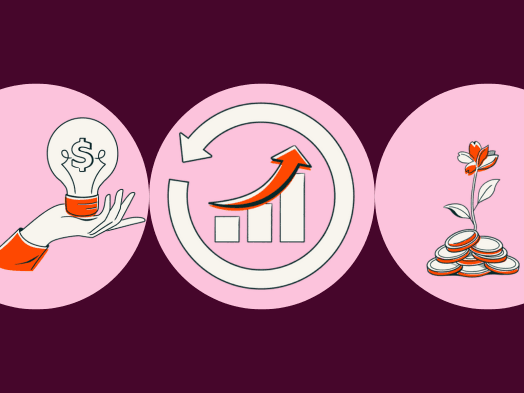
As we look toward 2030, the implications of adopting loop marketing tactics are profound. Businesses that embrace this model will likely enjoy a competitive advantage, as they can respond to market changes with unprecedented speed and precision. The continuous learning aspect of loop marketing means that each cycle builds upon the last, creating a compounding effect that drives growth and enhances market share.
The Importance of AI Integration
AI integration is at the heart of loop marketing. From generating personalized content variations to analyzing customer data for high-intent audiences, AI tools significantly enhance the scalability and efficiency of marketing efforts. Companies that fail to incorporate AI risk falling behind as competitors leverage these technologies to optimize their strategies.
Conclusion: The Imperative for Change
The transition from funnel marketing to loop marketing is not merely a trend; it is a necessary evolution in response to the changing dynamics of consumer behavior. As the marketing landscape continues to evolve, businesses must adapt or risk obsolescence. The rise of AI-powered loop marketing is a clear signal that the future of marketing will be defined by agility, personalization, and continuous improvement.
FAQ
Traditional funnel marketing is becoming obsolete because consumer behavior is no longer linear and predictable. Buyers now navigate fragmented channels, influenced by AI. Loop marketing, a four-stage AI-powered framework (Express, Tailor, Amplify, Evolve), is replacing it by enabling continuous learning, optimization, and adaptation to dynamic market conditions.
Loop Marketing integrates AI at every stage to enhance personalization, optimize reach, and enable real-time performance monitoring. AI tools help define ideal customer profiles, tailor messaging with enriched data, identify optimal channels for amplification, and facilitate rapid experimentation for continuous improvement, leading to compounding growth and competitive advantage.
Businesses adopting Loop Marketing by 2030 will gain a significant competitive advantage through unprecedented speed and precision in responding to market changes. The continuous learning and optimization inherent in the model create a compounding effect that drives growth, enhances market share, and improves the overall customer experience.