
Shifting Search Dynamics: The Challenge for Traditional Platforms
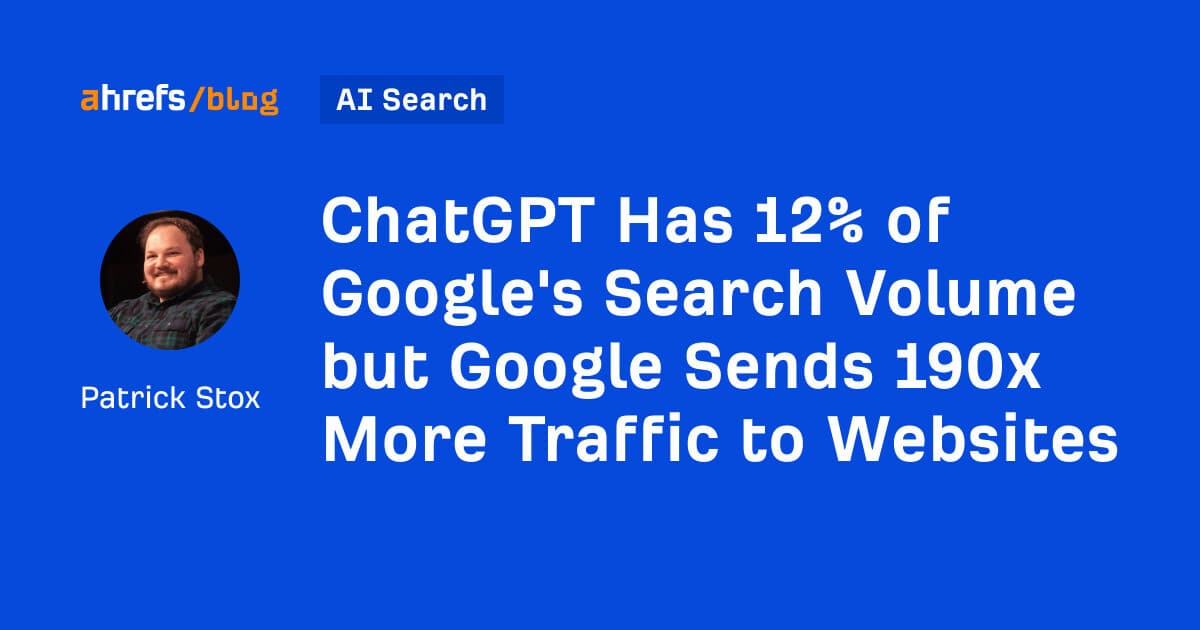
The advent of AI-driven platforms like ChatGPT has fundamentally altered the landscape of online search. As evidenced by ChatGPT capturing 12% of Google's search volume, we are witnessing a significant shift in consumer behavior and expectations. Traditional search engines, long the gatekeepers of information, now face unprecedented competition from AI technologies that offer more conversational, personalized, and immediate responses to user queries. This shift poses a critical challenge for businesses that rely on established search engine optimization (SEO) practices to drive traffic and engagement.
In this evolving environment, organizations must recognize the limitations of conventional search strategies. The reliance on keywords and backlinks is becoming less effective as AI models generate responses that synthesize information from multiple sources. Companies that fail to adapt risk losing visibility and relevance in a marketplace increasingly dominated by AI-driven interactions.
Moreover, the implications of this shift extend beyond search traffic; they impact customer engagement, brand loyalty, and ultimately revenue generation. Businesses must rethink their digital marketing strategies to incorporate AI technologies, ensuring they remain competitive in a landscape that is rapidly evolving.
Decoding the AI Mechanism: How ChatGPT Transforms Search Interactions
At the core of ChatGPT's success is the transformer model, a sophisticated neural network architecture that excels in natural language processing (NLP). Unlike traditional search engines that retrieve and rank web pages based on keyword relevance, ChatGPT interprets user queries and generates coherent, contextually relevant responses. This capability is powered by vast datasets and advanced machine learning techniques, enabling the model to understand nuances in language and provide answers that are not only accurate but also conversational.
The transformer model employs mechanisms such as self-attention and multi-head attention, allowing it to weigh the significance of different words in a sentence relative to one another. This results in a more nuanced understanding of user intent, enabling the model to deliver responses that feel personalized and engaging. As users increasingly gravitate towards these AI-driven interactions, businesses must adapt their content strategies to align with this new paradigm.
Furthermore, the integration of AI into search dynamics introduces new challenges for businesses. The traditional SEO metrics of click-through rates and page rankings may become less relevant as AI models prioritize user satisfaction and engagement over mere visibility. Companies must invest in understanding how AI interprets content and optimize their digital assets accordingly, focusing on quality, relevance, and user experience.
Strategic Implications: What This Means for Businesses and Stakeholders
The rise of AI-driven search platforms like ChatGPT presents both challenges and opportunities for various stakeholders. For marketers, the need to pivot from traditional SEO tactics to AI-centric strategies is paramount. This involves creating content that not only ranks well but also resonates with AI models, ensuring that it is engaging, informative, and contextually relevant.
Moreover, businesses must consider the implications for customer engagement. As AI technologies become more integrated into search interactions, consumers will expect quicker, more personalized responses. Companies that leverage AI to enhance customer service and interaction will likely see improved customer satisfaction and loyalty, translating into higher conversion rates.
Investors should also take note of this paradigm shift. Companies that successfully adapt to the AI-driven landscape are likely to outperform their competitors, making them attractive investment opportunities. Conversely, businesses that cling to outdated search strategies may struggle to maintain market share, posing risks for stakeholders.
In summary, the emergence of AI-driven platforms like ChatGPT is reshaping the search landscape, compelling businesses to rethink their strategies and embrace innovation. By understanding the mechanics behind these technologies and their implications for consumer behavior, organizations can position themselves for success in this new era of digital interaction.
FAQ
Traditional SEO relying on keywords and backlinks is becoming less effective. AI models synthesize information to provide direct, conversational answers, meaning businesses must shift their focus from ranking for keywords to creating engaging, informative, and contextually relevant content that AI models can readily interpret and utilize.
AI search platforms like ChatGPT utilize transformer models with advanced natural language processing (NLP). Unlike traditional engines that retrieve and rank web pages, these AI models interpret queries and generate coherent, contextually relevant responses by understanding language nuances and synthesizing information from vast datasets, offering a more personalized and conversational experience.
For businesses, the implication is a critical need to adapt digital marketing and content strategies to be AI-centric, focusing on user engagement and AI interpretation. For investors, companies that successfully navigate this AI-driven landscape are likely to outperform, presenting attractive opportunities, while those clinging to outdated methods may face market share erosion.
As AI becomes more integrated into search, consumers will expect faster, more personalized responses. Businesses that leverage AI to enhance customer service and interactions will likely see improved customer satisfaction and loyalty, leading to higher conversion rates and stronger brand relationships.