
Understanding China's Carbon Market Expansion
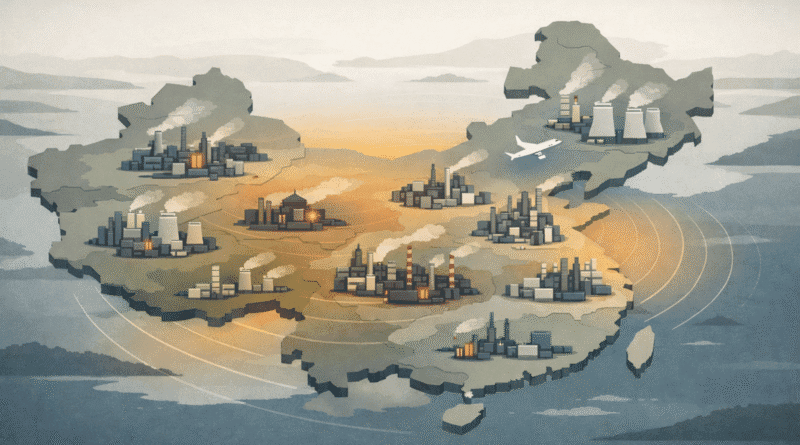
China's carbon market expansion is a pivotal development in global climate policy, particularly as the United States regresses in its regulatory framework. The recent inclusion of mandatory carbon reporting for heavy industries such as petrochemicals, chemicals, and civil aviation marks a significant step in China's emissions trading system (ETS). This expansion is not merely procedural; it lays the groundwork for future carbon pricing, which is essential for driving meaningful reductions in greenhouse gas emissions.
The Mechanics of Carbon Reporting
At its core, carbon reporting is about measurement and accountability. By extending reporting requirements, China is establishing a robust administrative framework that will facilitate the eventual pricing of carbon emissions in these newly covered sectors. This is akin to laying the foundation before constructing a building; without a solid base, the structure cannot stand. The current ETS already encompasses approximately 60% to 65% of national emissions, primarily from power generation, steel, cement, and aluminum. The inclusion of additional sectors could elevate this coverage to 70% or even 80% by the end of the decade.
How Pricing Works in the ETS
The current carbon prices in China's ETS, hovering between 40 and 90 yuan per ton (approximately $8 to $13), serve more as a signal than a driver of change. This pricing model allows emissions to grow in tandem with production, provided that emissions per unit remain within established benchmarks. In contrast, the European Union's ETS operates with higher prices, which have recently ranged from €70 to €100 ($84 to $120) per ton. This difference illustrates the varying levels of urgency and ambition in climate policy between the two regions.
Future Projections for Carbon Pricing
Looking ahead, the trajectory of carbon pricing in China will depend on several factors, including the shift from intensity-based allocation to a more stringent absolute cap. Under a gradual reform path, prices may rise to $60 to $80 per ton by 2050. However, if China adopts a more aggressive approach similar to the EU, prices could exceed $200 per ton by mid-century. This potential increase in carbon pricing is crucial for influencing capital allocation decisions across various sectors, including energy and infrastructure.
Strategic Implications of China's Carbon Market
China's expansion of its carbon market has significant implications for both domestic and international stakeholders. As the world's largest emitter, China's actions reverberate globally. Each $10 increase in carbon price applied to 10,000 million tons of emissions translates to an annual compliance value of $100 billion. This not only impacts domestic industries but also shapes international trade dynamics, especially in light of the European Union's Carbon Border Adjustment Mechanism (CBAM), which imposes carbon costs on imported goods.
Contrasting Approaches: China vs. the U.S.
While China is advancing its carbon market, the United States is retreating from federal climate regulation. The recent revocation of the greenhouse gas endangerment finding by the EPA dismantles the legal framework for regulating emissions, contrasting sharply with China's proactive stance. This divergence highlights a critical moment in global climate policy, where institutional direction is increasingly defined by the commitment to carbon pricing and regulatory frameworks.
The Path Forward for China
China's approach to climate policy is characterized by a phased and structured integration into industrial planning. The current expansion of reporting obligations and the anticipated inclusion of additional sectors into the ETS suggest a long-term strategy aimed at achieving carbon neutrality by 2060. The gradual tightening of regulations and the eventual shift toward auctioning allowances will enhance the effectiveness of the carbon market, providing a clearer investment signal for businesses.
FAQ
China's expansion of its carbon market, including mandatory reporting for heavy industries, is a significant strategic move towards establishing carbon pricing and driving emissions reductions. This contrasts sharply with the US's regulatory rollback, positioning China as a leader in global climate policy and potentially influencing international trade dynamics, particularly with mechanisms like the EU's CBAM.
China's carbon prices are currently low but are expected to rise significantly. Depending on the pace of reform, prices could reach $60-$80 per ton by 2050 under a gradual approach, or exceed $200 per ton with a more aggressive, EU-like strategy. This increasing carbon cost will directly impact compliance expenses and influence capital allocation decisions for energy-intensive industries.
China's ETS currently covers 60-65% of national emissions, primarily from power generation, steel, cement, and aluminum. The recent inclusion of petrochemicals, chemicals, and civil aviation is expected to increase coverage to 70-80% by the end of the decade, laying the groundwork for more robust emissions management and pricing.
China's current carbon prices are significantly lower than the EU's, reflecting a more gradual approach to emissions reduction. While China's ETS allows emissions to grow with production within benchmarks, the EU's higher prices act as a stronger driver for change. This divergence highlights different national priorities and paces in climate action, impacting global efforts to address climate change.