
Executive Summary
The recent report from Ember, a global energy think tank, highlights a critical misalignment in how energy is perceived and utilized in the United States, particularly under the banner of 'energy dominance.' This concept, heavily promoted by the current administration, equates energy abundance with national strength, but fails to account for the substantial waste and inefficiency inherent in fossil fuel reliance. As the world increasingly recognizes the advantages of renewable energy and efficient technologies, the U.S. risks falling behind by clinging to outdated paradigms that prioritize fossil fuel production over sustainable energy solutions. The stakes are high, as this approach not only jeopardizes environmental goals but also threatens economic stability and competitiveness in a rapidly evolving global energy landscape.
Key Insights
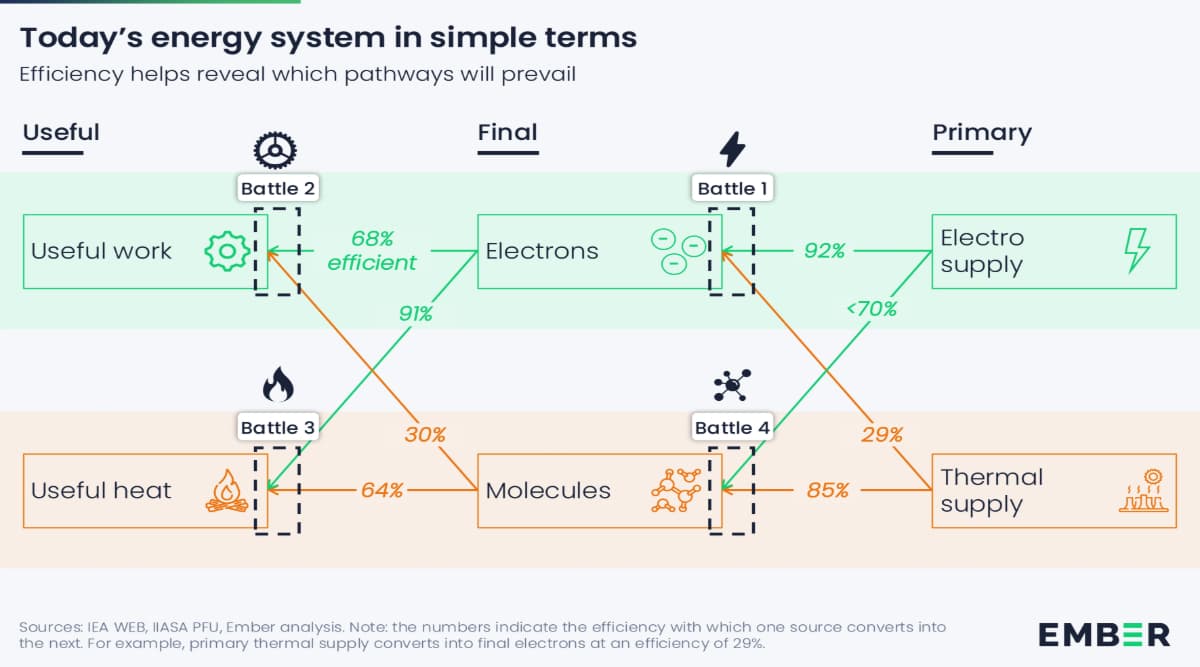
- Ember's report asserts that the traditional view of energy supply is flawed, focusing excessively on fossil fuel production while neglecting efficiency and consumer demand.
- A staggering 60% of energy from fossil fuels is wasted during extraction and consumption processes, with only 10-15% effectively utilized for productive work.
- In contrast, electric technologies, such as heat pumps and electric motors, demonstrate significantly higher efficiency rates, converting energy into useful work at rates exceeding 90%.
- A recent global poll revealed that 97% of business executives are eager to transition to renewable energy, citing its efficiency and economic advantages over fossil fuels.
- The current U.S. energy policy, which emphasizes fossil fuel exports, may undermine international energy security and economic stability, particularly as countries like China lead in clean energy technology.
Strategic Implications
Industry Impact
The implications of Ember's findings are profound for the energy sector. The traditional focus on fossil fuel supply is increasingly at odds with the realities of energy efficiency and sustainability. As businesses and consumers become more aware of the inefficiencies associated with fossil fuels, there is a growing demand for cleaner, more efficient energy sources. This shift could catalyze significant changes in the energy market, favoring companies that prioritize renewable energy technologies.
Companies that continue to invest heavily in fossil fuel infrastructure may find themselves at a competitive disadvantage as the market shifts toward efficiency and sustainability. The current reliance on fossil fuels not only perpetuates waste but also exposes companies to risks associated with geopolitical volatility and regulatory changes aimed at reducing carbon emissions. This environment creates a precarious situation for traditional energy companies, which may face declining market share and profitability as renewable alternatives gain traction.
Investor Considerations
For investors, the transition to renewable energy presents both risks and opportunities. The inefficiencies associated with fossil fuel investments are becoming increasingly apparent, and companies that fail to adapt may see their valuations decline. Conversely, investments in renewable energy technologies and companies that prioritize efficiency are likely to yield significant returns as demand for clean energy solutions increases.
Investors should closely monitor the evolving energy landscape, particularly as regulatory frameworks shift toward sustainability. The potential for government incentives for renewable energy projects could further enhance the attractiveness of these investments. As global trends indicate a pivot towards clean energy, investors who align their portfolios with these developments may mitigate risks associated with fossil fuel volatility.
Competitive Landscape
The competitive dynamics within the energy sector are shifting as companies that embrace renewable technologies gain an edge over traditional fossil fuel producers. As the Ember report highlights, the efficiency of electric technologies compared to fossil fuels is a critical factor that will shape future competition. Companies that prioritize innovation in energy efficiency and invest in clean technologies will likely lead the market.
Furthermore, as countries like China position themselves as leaders in clean energy technology, the U.S. risks losing its competitive advantage if it continues to prioritize fossil fuel exports over sustainable energy solutions. The global energy market is increasingly influenced by countries that prioritize efficiency and sustainability, and U.S. companies must adapt to these changes to remain competitive.
Policy Considerations
The findings from Ember raise important questions regarding U.S. energy policy. The current emphasis on energy dominance through fossil fuel exports may hinder the country's ability to transition to a more sustainable energy system. Policymakers must recognize the inefficiencies associated with fossil fuels and prioritize investments in renewable energy technologies that can deliver higher efficiency and lower environmental impact.
Moreover, as global energy dynamics evolve, the U.S. must reconsider its role in the international energy landscape. By investing in clean energy technologies and promoting energy efficiency, the U.S. can enhance its energy security and establish itself as a leader in the global transition to renewable energy. This shift will require a reevaluation of current policies and a commitment to fostering innovation in the energy sector.
The Bottom Line
The Ember report underscores a critical need for a paradigm shift in how energy is conceptualized and utilized in the U.S. The current focus on fossil fuel dominance is not only inefficient but also counterproductive in the context of global energy trends. As businesses and consumers increasingly demand cleaner, more efficient energy solutions, the U.S. must adapt its policies and investments to align with these changing dynamics. Failure to do so could result in significant economic and competitive disadvantages as the world moves towards a more sustainable energy future.