
Executive Summary
India's energy security architecture is undergoing a critical recalibration as the nation signals a decisive prioritization of natural gas allocations towards the fertilizer and city gas distribution (CGD) sectors. This strategic maneuver, prompted by persistent disruptions in liquefied natural gas (LNG) supply chains, particularly the shutdown of production by QatarEnergy, introduces immediate tension into the domestic energy market. The potential reduction of 60 million standard cubic meters per day (MSCMD) from India's total consumption of 195 MSCMD necessitates a proactive governmental stance to safeguard essential sectors. This decision underscores India's vulnerability to global energy choke points, such as the Strait of Hormuz, and its significant reliance on imports, with approximately 40-42% of its natural gas originating from Qatar. The government's engagement with international bodies like the International Energy Agency (IEA) and OPEC, alongside direct negotiations with suppliers in the US, Australia, and Canada, signifies a multi-pronged approach to mitigating supply risks. However, the underlying tension remains: how to balance the critical needs of agriculture and urban infrastructure with the broader industrial and economic demands of a rapidly growing nation when global supply chains falter.Key Insights
- Supply Disruption Impact: The shutdown of LNG production by QatarEnergy poses a significant threat, potentially impacting 60 MSCMD of India's daily natural gas consumption, which stands at 195 MSCMD.
- Import Dependency: India imports half of its natural gas requirements, with a substantial portion, approximately 40-42%, sourced from Qatar, highlighting a concentrated import risk.
- Governmental Engagement: India is actively engaging with international entities, including the International Energy Agency (IEA) and OPEC, as well as directly with major LNG exporting nations like the US, Australia, and Canada, to secure alternative supplies.
- Trader and NOC Outreach: The government is in communication with international traders such as Sonatrach Petroleum, ADNOC, Trafigura, and Vitol, alongside national oil companies, to procure both LNG and Liquefied Petroleum Gas (LPG).
- Prioritization Strategy: In the event of persistent supply bottlenecks, India's government intends to "re-prioritize" natural gas allocation, ensuring uninterrupted supplies for the fertilizer and city gas distribution (CGD) sectors.
- GAIL's Situation: GAIL has confirmed a halt in supplies from Qatar and is assessing the necessity of curtailing supplies to certain downstream customers, following a force majeure declaration by its long-term supplier, Petronet LNG (PLL).
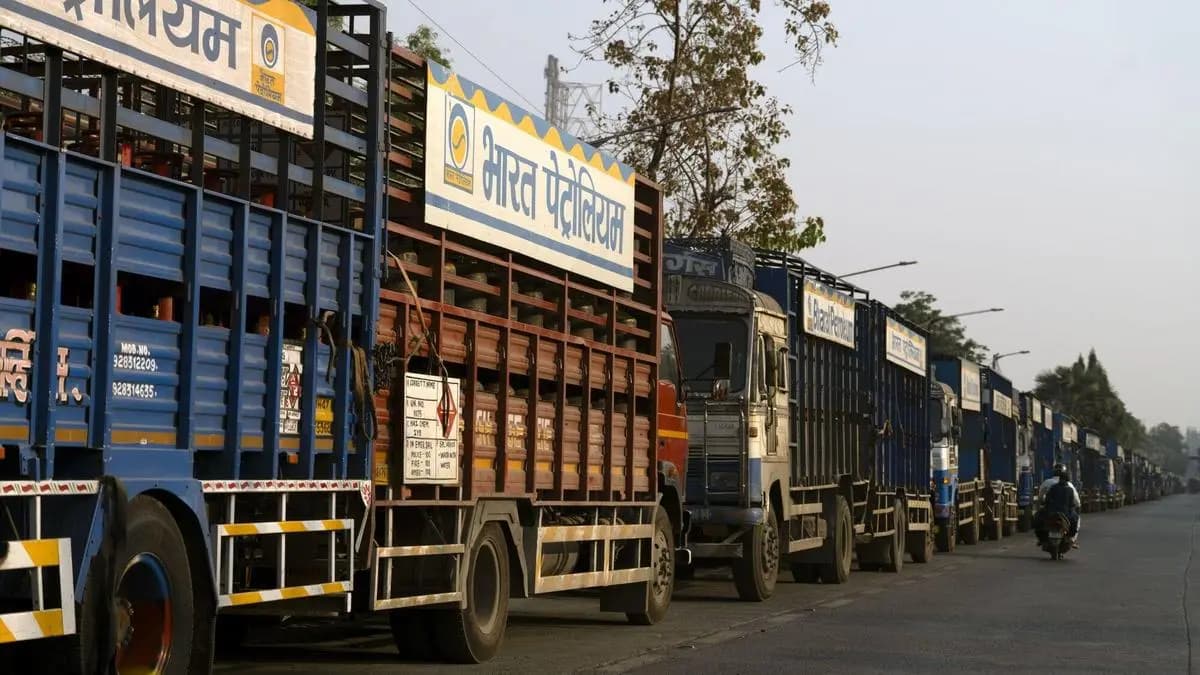
- LPG Supply Assurance: Despite importing over half of its LPG needs, with 90% from West Asia passing through the Strait of Hormuz, India is diversifying sources with supplies from the US and Norway, and leveraging domestic refining capacity.
- Marine Insurance Discussions: India is in dialogue with the US regarding a proposed mechanism for marine insurance for vessels transiting critical energy choke points, aiming to mitigate risks associated with maritime transport.
- Refinery Flexibility Limitations: While refineries can be directed to maximize LPG yields, operational constraints and configurations limit their ability to significantly compensate for import shortfalls, as noted by Kpler's Lead Research Analyst.
- US Support for West Asia Trade: The US International Development Finance Corporation has indicated readiness to deploy Political Risk Insurance and Guaranty products to stabilize international commerce in West Asia.
Strategic Implications
Industry Wins and Losses
The immediate consequence of this prioritization is a bifurcated impact across India's industrial landscape. The fertilizer sector, a cornerstone of the nation's agricultural output and food security, stands to benefit from guaranteed supply. This ensures continuity in production, potentially stabilizing input costs for farmers and preventing a cascade of negative effects on crop yields and food prices. Similarly, the city gas distribution (CGD) sector, which supplies cooking gas to households and fuel for compressed natural gas (CNG) vehicles, will receive preferential treatment. This safeguards urban energy access and mobility, critical for maintaining social stability and economic activity in densely populated areas. However, this prioritization inevitably creates a deficit for other industrial consumers. Sectors heavily reliant on natural gas for power generation, industrial heating, or as a feedstock, but not falling under the prioritized categories, are likely to face significant supply curtailments. This could lead to production halts, increased operational costs due to the need to switch to more expensive alternative fuels, and a slowdown in their respective growth trajectories. The competitive landscape within these non-prioritized sectors will be reshaped, favoring those with greater flexibility in feedstock sourcing or those less dependent on natural gas.Investor Risks and Opportunities
For investors, the situation presents a complex interplay of risks and opportunities. Companies within the fertilizer and CGD sectors, particularly those with long-term contracts and robust supply chain management, may see their stability and profitability enhanced. Their strategic importance to the government translates into a lower risk profile during this period of uncertainty. Conversely, investors in industries that are likely to face supply cuts will need to reassess their portfolio's exposure. The potential for reduced output, increased costs, and disrupted business operations translates into higher investment risk. However, this disruption also catalyzes opportunities. The heightened focus on energy security and supply chain resilience could spur significant investment in alternative energy sources, including renewables and domestically produced gas. Companies involved in LNG infrastructure development, storage solutions, and the exploration of new gas reserves, both domestically and in politically stable regions, could attract substantial capital. Furthermore, the drive to diversify away from single-source dependencies might accelerate innovation in energy efficiency and alternative feedstocks for industrial processes, creating new investment avenues.Competitor Positioning
Competitors within the prioritized sectors, namely fertilizer and CGD, will find themselves in a relatively stable, albeit potentially more regulated, operating environment. The government's commitment to ensuring their supply creates a buffer against the volatility impacting others. This could lead to a consolidation of market share for established players who can effectively manage their operations under these conditions. For competitors in non-prioritized sectors, the challenge is immense. Those who can quickly adapt by securing alternative fuel sources, optimizing their energy consumption, or even temporarily scaling back operations might weather the storm better than those who cannot. The crisis could expose structural weaknesses in competitors' supply chain strategies and operational agility. It also presents an opportunity for companies that have already invested in energy diversification or possess more resilient business models to gain a competitive edge. The long-term implications could see a strategic realignment of market power, with companies demonstrating adaptability and foresight emerging stronger.Policy Considerations
This supply disruption scenario forces a critical re-evaluation of India's energy policy. The immediate response of prioritization highlights the tension between economic growth imperatives and national security concerns. It underscores the strategic vulnerability inherent in a high import-dependent energy model, particularly when geopolitical instability affects key transit routes and major supply hubs. This event is likely to accelerate policy initiatives aimed at enhancing domestic gas production, diversifying import sources geographically, and potentially increasing strategic reserves. The government's engagement on marine insurance for tankers signals a proactive approach to mitigating transit risks. Furthermore, the situation may prompt policy shifts to incentivize the development and adoption of alternative energy sources and technologies that reduce reliance on natural gas for critical sectors. This could include greater support for renewable energy integration, advancements in fertilizer production technologies not dependent on natural gas, and enhanced energy efficiency mandates across industries. The long-term policy focus will likely shift towards building a more resilient, diversified, and self-sufficient energy ecosystem.The Bottom Line
India's strategic decision to prioritize natural gas for fertilizers and city gas distribution amid global supply chain disruptions signals a fundamental shift in energy allocation priorities, driven by national security and essential service continuity. This move, while safeguarding critical sectors, exposes non-prioritized industries to significant risks and necessitates a broader national strategy to bolster energy resilience through diversification, domestic production, and alternative energy solutions. The enduring tension lies in balancing immediate needs with long-term energy independence, a challenge that will define India's industrial and economic trajectory in the coming years.Source: Hindu Business Line
 Spotify
 Apple
Apple Amazon
 YouTube