
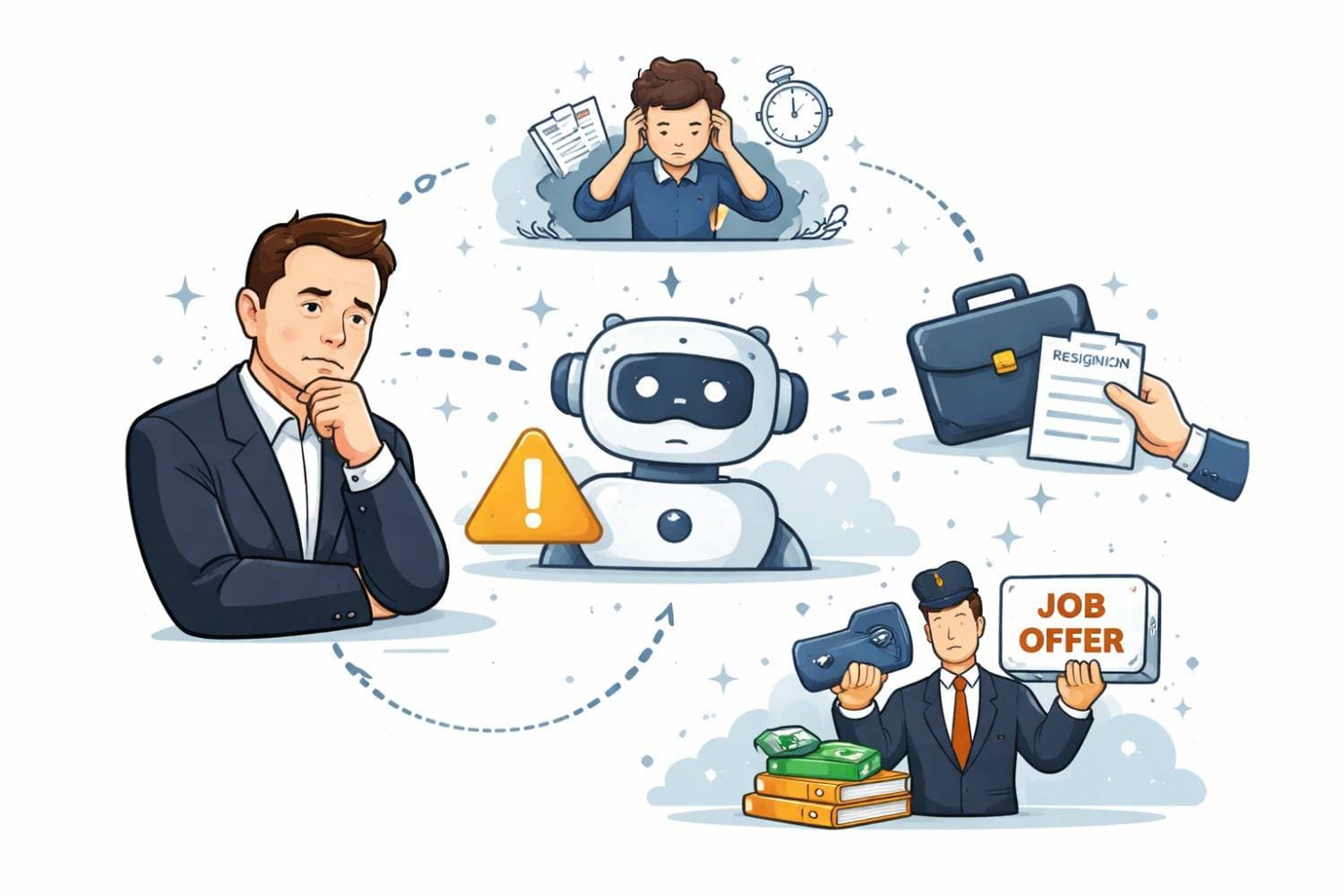

Shifting Sands: The Turbulent Landscape of AI Innovation
Elon Musk's xAI, a venture aimed at developing artificial intelligence with a focus on safety and alignment, is currently facing significant turbulence. Recent high-profile departures have raised alarms about the company's strategic direction and its ability to maintain a competitive edge in the rapidly evolving AI landscape. The departures of key personnel, including prominent researchers and engineers, signal deeper issues within the organization that could hinder its progress and innovation capabilities.
The AI industry is characterized by a fierce race for talent, with companies vying for the best minds to drive their technological advancements. As the demand for AI solutions skyrockets across various sectors, the loss of experienced professionals can create a ripple effect, impacting not only the internal dynamics of xAI but also its external partnerships and collaborations. With competitors like OpenAI, Google DeepMind, and various startups aggressively pushing the boundaries of AI, xAI's ability to attract and retain talent is more critical than ever.
Moreover, the scrutiny surrounding xAI's operational strategies and ethical considerations raises questions about its long-term viability. Musk's controversial approach to AI, often marked by a blend of visionary ambition and erratic decision-making, may not resonate well with potential recruits who seek stability and a clear ethical framework in their work. This dichotomy could further exacerbate the talent drain, leading to a cycle of instability that hampers xAI's growth.
Dissecting the Tech Stack: The Challenges of Building a Robust AI Framework
To understand the implications of recent departures at xAI, it's essential to examine the underlying technology stack and the business moat that the company has been attempting to establish. xAI aims to create advanced AI systems that prioritize safety and alignment with human values, a noble goal that requires a solid foundation of research and development.
The core of xAI's technological ambitions lies in its ability to innovate within the framework of existing AI paradigms, including deep learning and reinforcement learning. However, the effectiveness of these models is heavily reliant on the expertise of the individuals who design, implement, and refine them. The recent loss of key personnel raises concerns about the continuity of knowledge and the potential for increased technical debt, as remaining team members may struggle to fill the gaps left behind.
Furthermore, the question of vendor lock-in looms large for xAI. As the company develops its proprietary technology, it must navigate the fine line between leveraging existing frameworks and creating a unique offering that differentiates it from competitors. Relying too heavily on third-party tools and platforms can lead to dependencies that stifle innovation and flexibility, ultimately limiting xAI's ability to pivot in response to market demands.
In the context of AI, where rapid advancements can render existing technologies obsolete, the challenge of maintaining a nimble and adaptive tech stack is paramount. xAI's ability to innovate and iterate on its offerings will be directly influenced by its internal culture and the retention of its technical talent. The departure of experienced professionals not only affects current projects but also places future initiatives at risk, as institutional knowledge and expertise are lost.
Strategic Ramifications: What This Means for Stakeholders in the AI Ecosystem
The fallout from xAI's recent departures extends beyond the company itself, impacting various stakeholders within the AI ecosystem. For investors, the uncertainty surrounding xAI's leadership and strategic direction may raise red flags, potentially affecting funding and valuation. Investors typically seek stability and a clear vision, and the perception of instability can lead to hesitance in committing capital to the venture.
For competitors, xAI's challenges present both opportunities and threats. Established players may view the exodus of talent as an opportunity to recruit skilled individuals who can bring fresh perspectives and innovations to their own organizations. Conversely, if xAI manages to stabilize and refocus its efforts, it could emerge as a formidable competitor, leveraging its unique vision and technology to carve out a niche in the market.
Additionally, the broader AI community may feel the impact of xAI's struggles. As a high-profile player in the field, xAI's vision and ethical considerations have the potential to shape industry standards and practices. However, if the company falters, it could lead to a fragmentation of efforts within the AI sector, as other organizations may hesitate to align themselves with a venture perceived as unstable.
In conclusion, the recent departures at xAI underscore the fragility of talent retention in the AI industry and the strategic implications that arise from such shifts. As the company grapples with its internal challenges, stakeholders must remain vigilant, assessing the potential risks and opportunities that may arise in the wake of these developments.
FAQ
The primary strategic risks include a potential loss of critical expertise impacting innovation and development, increased technical debt due to knowledge gaps, and a weakened ability to attract and retain top talent in a highly competitive AI market, which could hinder its progress and long-term viability.
These departures could significantly weaken xAI's competitive positioning by slowing down its innovation cycle, reducing its capacity to develop and refine advanced AI models, and potentially leading to a loss of proprietary knowledge. This creates an opening for competitors to gain market share and recruit valuable talent.
The perception of instability and leadership uncertainty can significantly erode investor confidence, potentially leading to hesitance in committing capital, lower valuations, and increased difficulty in securing future funding rounds. Investors prioritize stability and a clear strategic vision.
If xAI falters, it could lead to a fragmentation of efforts within the AI sector, potentially slowing down progress on safety and alignment initiatives. It also presents an opportunity for competitors to absorb talent and potentially influence industry standards more directly, while also signaling the inherent volatility of AI ventures.


