
The End of Beauty Exclusivity: A Three-Tier Market Emerges
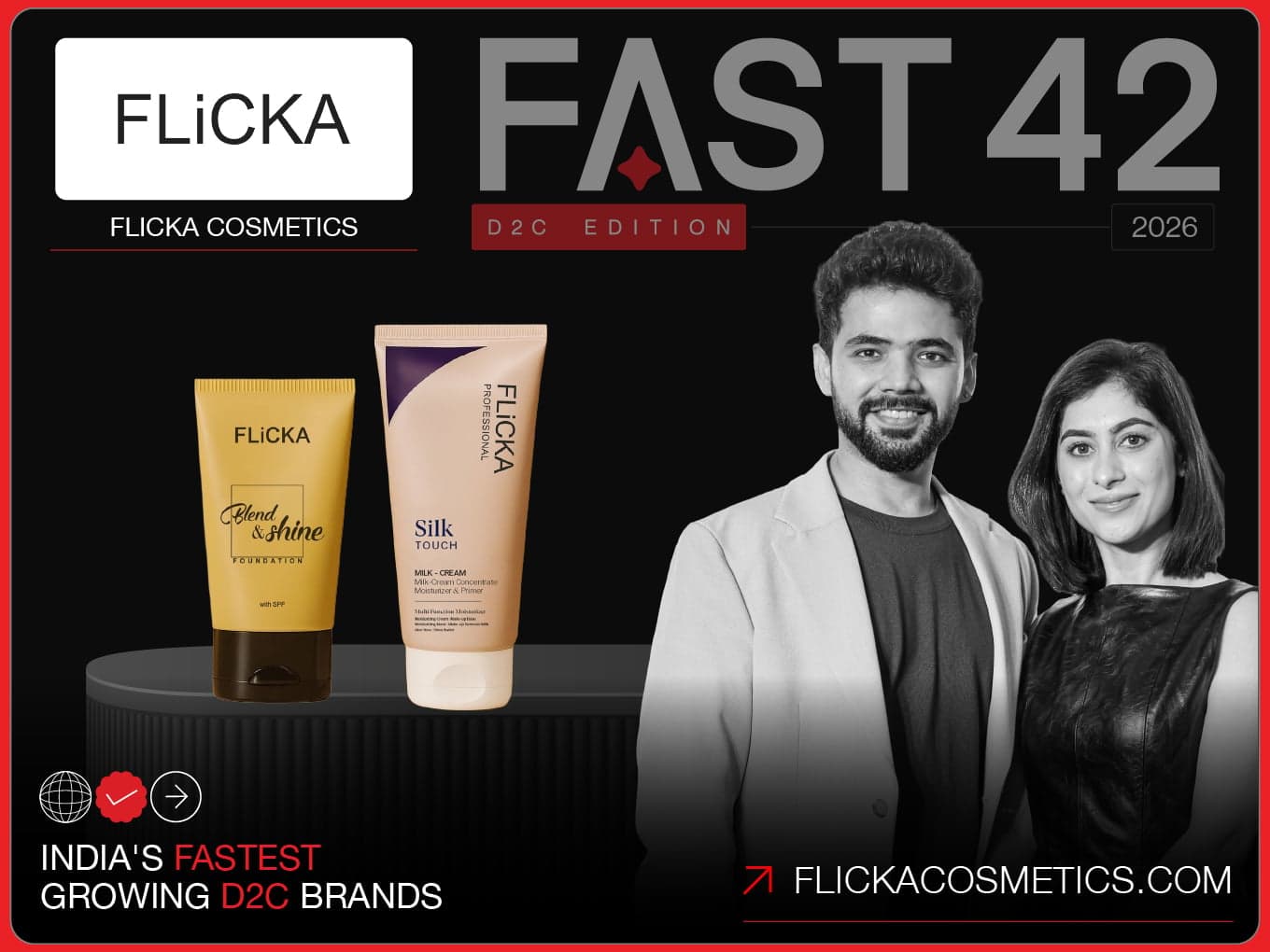
The Indian beauty market is undergoing a structural realignment. For decades, the industry was bifurcated into a premium tier dominated by international luxury brands and a mass tier flooded with low-cost, often low-quality products. But a new segment is crystallizing: the 'missing middle' – 285 million consumers who demand quality, ethical production, and formulations tailored to Indian skin tones, but at accessible price points. FLiCKA Cosmetics has positioned itself squarely in this gap, and its early traction reveals a blueprint for capturing this underserved demographic.
India's beauty market is projected to reach $44.6 billion by 2032, according to Inc42. Within that growth, the missing middle represents the fastest-expanding cohort, driven by rising disposable incomes in tier-2 and tier-3 cities, increased digital penetration, and a shift toward conscious consumerism. FLiCKA's strategy of offering vegan, cruelty-free, and FDA-certified products specifically designed for Indian skin tones is not just a marketing angle – it is a structural moat that global incumbents have largely ignored.
FLiCKA's Unfair Advantage: Localization as a Moat
FLiCKA's core differentiator is its deep understanding of Indian consumer needs. While multinational brands often adapt global formulations with minor tweaks, FLiCKA builds from the ground up for Indian skin tones, which vary widely across regions and require specific undertones, coverage, and longevity in humid climates. This localization creates a product-market fit that is difficult for outsiders to replicate quickly.
The brand's commitment to vegan and cruelty-free certifications also aligns with a generational shift among Indian millennials and Gen Z, who increasingly factor ethics into purchase decisions. By securing FDA certification, FLiCKA adds a layer of trust that is particularly valuable in a market where counterfeit and substandard cosmetics are rampant.
Financially, FLiCKA's pull-led growth strategy – focusing on customer feedback and influencer collaborations rather than aggressive SKU expansion or discounting – has yielded a 30% repeat customer rate. This is a strong indicator of brand loyalty and product satisfaction, especially in a category where trial and repurchase are often low. The brand's sell-out success with its foundation and HD foundation lines demonstrates that a focused product range can outperform a cluttered portfolio.
Revenue Targets and Scaling Strategy
FLiCKA has set clear financial milestones: INR 50 crore by FY26 and INR 100 crore by FY28. Achieving these targets will require disciplined execution, particularly in expanding distribution beyond metropolitan areas. The brand's stated commitment to tier-2 and tier-3 cities is strategically sound – these markets have lower penetration of quality cosmetics but rapidly growing demand, driven by social media exposure and increasing disposable income.
However, scaling into smaller cities presents logistical challenges: supply chain fragmentation, lower digital literacy, and price sensitivity that may pressure margins. FLiCKA's direct-to-consumer (D2C) model, combined with selective retail partnerships, could mitigate some of these risks. The brand's ability to maintain its 30% repeat rate while expanding will be a key metric to watch.
Competitive Dynamics: Who Gains, Who Loses?
Winners: FLiCKA itself, by capturing a first-mover advantage in the missing middle. Consumers in tier-2 and tier-3 cities gain access to high-quality, ethical products that were previously unavailable or unaffordable. Ethical beauty advocates benefit from increased availability of vegan and cruelty-free options in the mass market.
Losers: Traditional mass-market brands that rely on low-cost, low-quality formulations will face pressure as consumers upgrade to FLiCKA's value proposition. Premium international brands may also see erosion in their aspirational appeal if FLiCKA successfully positions itself as a 'premium for all' alternative.
The broader market impact is a further segmentation of the beauty industry. The missing middle is not a temporary trend – it is a permanent structural shift driven by demographic and economic forces. Brands that fail to address this segment risk losing relevance in the next decade.
Outlook and Next Steps for Executives
For investors, FLiCKA represents a high-growth opportunity in a large addressable market. The brand's focus on product performance and customer retention provides a solid foundation for scaling. However, the competitive landscape will intensify as other D2C brands and incumbents recognize the missing middle opportunity.
For incumbents, the lesson is clear: localization and ethical certification are no longer optional. Brands must invest in R&D for skin-tone-specific formulations and transparent supply chains to compete. The window to establish a foothold in the missing middle is narrowing.
For FLiCKA, the next 24 months are critical. Achieving INR 50 crore by FY26 will validate its model and attract further investment. The brand should also explore offline retail partnerships in tier-2 cities to build trust and accessibility. Monitoring repeat purchase rates and customer acquisition costs will be essential to ensure sustainable growth.
FAQ
FLiCKA Cosmetics targets the 'missing middle' consumer by offering high-quality, affordable, vegan, cruelty-free, and FDA-certified beauty products specifically formulated for Indian skin tones. This focus on local relevance and product performance, rather than aggressive expansion or discounting, creates a significant competitive advantage.
FLiCKA builds its moat through a pull-led growth strategy centered on customer feedback and influencer collaborations, emphasizing product performance. This approach has resulted in a 30% repeat customer rate and successful sell-outs of key products, demonstrating strong market resonance and customer loyalty.
FLiCKA aims to achieve INR 50 crore in revenue by FY26 and scale to INR 100 crore by FY28. The brand is strategically expanding beyond metropolitan areas to make its products accessible in tier-2 and tier-3 cities, tapping into the broader Indian market ('Bharat').