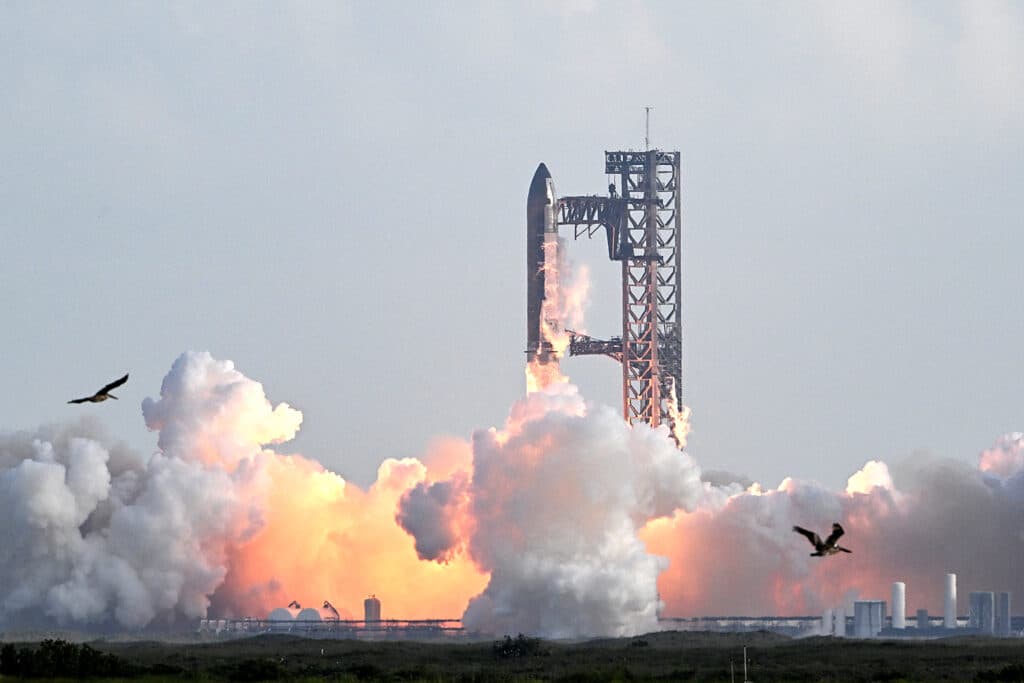

The commercial space industry faces a mounting liability that most stakeholders have yet to price into their business models: atmospheric pollution from rocket launches and satellite re-entries. New research indicates that by 2040, up to 60,000 satellites could be in orbit, injecting 10,000 metric tons of aluminum oxide particles into the upper atmosphere each year. This could warm the upper atmosphere by approximately 1.5 degrees Celsius, with cascading effects on global weather patterns and ozone chemistry. For executives in the space sector, this is not merely an environmental concern—it is a strategic risk that will reshape regulatory landscapes, competitive dynamics, and long-term profitability.
The Unpriced Liability in Space Operations
Current accounting for space missions largely ignores the cost of atmospheric emissions. Unlike terrestrial industries, which face carbon taxes, emission caps, and pollution penalties, the space sector operates in a regulatory vacuum. This is changing. The Outer Space Treaty already obligates nations to avoid harmful contamination of outer space and the Earth's environment. As scientific evidence of damage mounts, governments and international bodies will face pressure to enforce these provisions. The cost of inaction for space companies could be severe: retroactive fines, launch moratoriums, or mandatory emission offsets that could add millions per mission.
Who Bears the Cost?
The burden will fall disproportionately on operators of large satellite constellations. SpaceX's Starlink, Amazon's Project Kuiper, and other mega-constellation projects are the primary drivers of the projected 60,000-satellite fleet. These companies benefit from rapid deployment and first-mover advantages, but they also accumulate the largest environmental liabilities. Traditional rocket manufacturers, such as ULA and Arianespace, face the need to redesign engines for lower emissions—a capital-intensive process that could erode their competitive position against newer entrants with cleaner propulsion technologies.
Environmental monitoring firms and green propulsion technology providers stand to gain. The demand for real-time tracking of upper-atmosphere emissions will create a new market for sensors, satellite-based monitoring, and data analytics. Companies that can verify compliance with future regulations will be essential partners for space operators seeking to demonstrate environmental responsibility.
Regulatory Trajectory and Compliance Risks
The regulatory timeline is uncertain but accelerating. The European Union is already exploring space sustainability legislation, and the U.S. Federal Aviation Administration has signaled interest in environmental reviews for launch licenses. The International Telecommunication Union, which allocates orbital slots, could incorporate emission criteria into its licensing process. For space companies, the window to shape these regulations is narrow. Proactive engagement—through industry coalitions, voluntary emission reduction targets, and investment in monitoring technology—can help set standards that are achievable rather than punitive.
Non-compliance carries reputational and legal risks. Environmental NGOs are increasingly focused on space pollution, and a high-profile lawsuit or shareholder resolution could trigger a cascade of regulatory action. Companies that ignore the issue may find themselves locked out of key markets or facing costly litigation.
Second-Order Consequences for the Broader Economy
The atmospheric warming from aluminum oxide particles is not confined to the space sector. A 1.5-degree Celsius temperature increase in the upper atmosphere could alter jet stream patterns, affect agricultural yields, and disrupt telecommunications. Insurers, agricultural firms, and infrastructure operators have a direct interest in limiting this pollution. These stakeholders may push for stricter regulations, creating a broader coalition that accelerates policy action.
For investors, the space sector's environmental footprint introduces a new dimension of risk. ESG funds, which have largely avoided space stocks due to governance concerns, may now add environmental criteria to their screens. This could reduce capital availability for high-emission operators and increase the cost of capital for those that fail to address pollution.
Strategic Recommendations for Executives
First, conduct a full lifecycle emission audit for your current and planned satellite constellations. Understand the aluminum oxide and other particulate loads from both launches and re-entries. Second, invest in low-emission propulsion technologies, such as electric thrusters or green propellants, to reduce your regulatory exposure. Third, engage with policymakers to help shape emission standards that are science-based and technologically feasible. Fourth, consider forming an industry consortium to fund independent monitoring of upper-atmosphere pollution, demonstrating good faith and building credibility.
Finally, communicate your environmental strategy to investors and customers. The space industry's license to operate depends on public trust. Companies that lead on sustainability will differentiate themselves in a crowded market and attract premium valuations.
FAQ
The primary environmental risks stem from rocket pollution, where companies may be treating the atmosphere as a dumping ground. This includes significant emissions of aluminum oxide particles from rocket launches and disintegrating satellites, which can warm the upper atmosphere, disrupt global weather patterns, and potentially damage the ozone layer.
Inaction on rocket pollution poses significant financial risks. Increased emissions could lead to stricter regulations and compliance costs, impacting profitability. Furthermore, the environmental consequences, such as disrupted weather patterns, could have broader economic repercussions across various sectors, indirectly affecting the industry.
The industry faces challenges related to international agreements like the Outer Space Treaty, which mandates avoiding harmful contamination. Non-compliance can lead to legal repercussions and reputational damage. As the sector expands, there's a critical need for robust monitoring and adherence to evolving environmental standards to avoid costly penalties and maintain a positive corporate image.
Stakeholders should proactively invest in pollution monitoring technologies, particularly element-specific tracking, to gain insights into emissions and inform policy. Engaging with regulators early to help shape future environmental guidelines is also crucial for avoiding future penalties and ensuring sustainable operations.