
Executive Summary
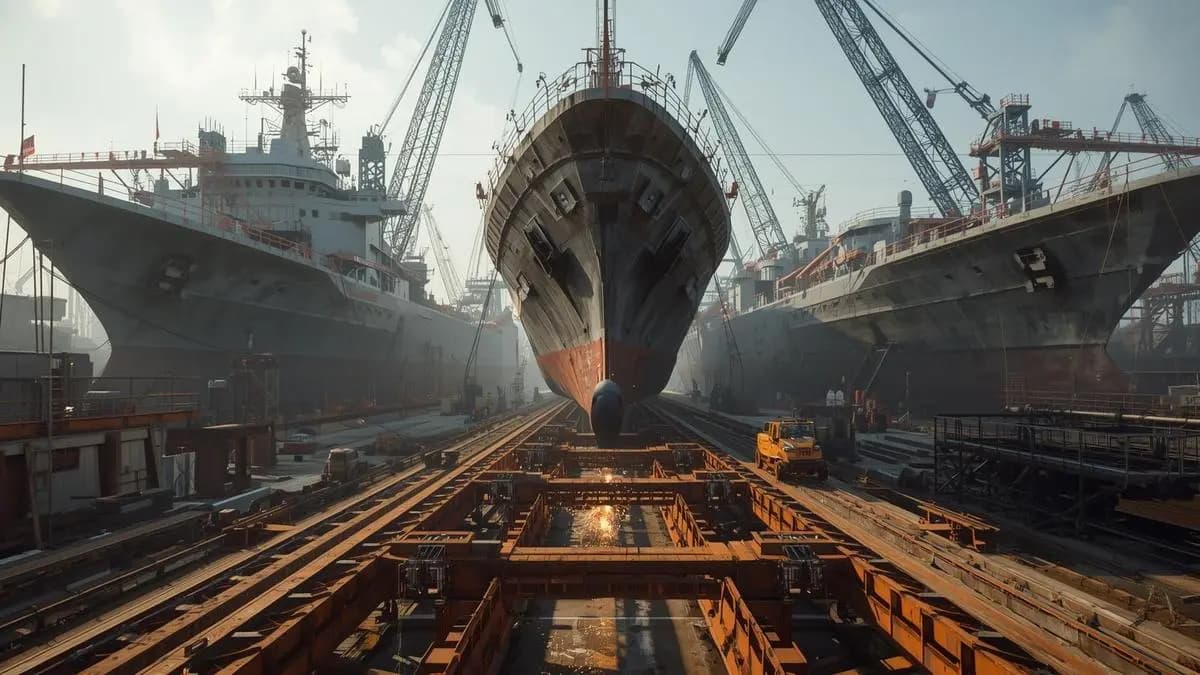
The Tamil Nadu government has introduced the Shipbuilding Policy 2026, aiming to establish the state as a pivotal hub for the construction of high-value, large ocean-going vessels, particularly Very Large Crude Carriers (VLCCs). This initiative is part of a broader strategy to capitalize on India's growing maritime ambitions, which are supported by significant federal investment in the shipbuilding sector. The policy outlines a structured package of assistance for shipyards willing to invest a minimum of ₹1,000 crore, creating at least 1,000 jobs. This strategic move not only seeks to enhance Tamil Nadu's position in the global maritime landscape but also aims to stimulate local economies through job creation and infrastructure development.
Key Insights
- The Shipbuilding Policy 2026 is designed to attract investments in shipyards that manufacture, repair, and maintain large vessels.
- Qualifying shipyards must commit at least ₹1,000 crore in investment and create a minimum of 1,000 jobs.
- Four incentive mechanisms are available: equity participation by the state, an asset leasing model, capital subsidies, and production-linked incentives.
- A Special Purpose Vehicle (SPV) will be established under the State Industries Promotion Corporation of Tamil Nadu (SIPCOT) to facilitate the implementation of the policy.
- The policy aligns with the Centre's broader initiatives, including a ₹69,725 crore support package for the shipbuilding sector.
- India's current shipbuilding market share is modest, accounting for only about 0.06% of the global market.
- The policy will remain valid for five years or until a new policy is introduced, with provisions for periodic revisions.
Strategic Implications
Industry Impact
The introduction of the Shipbuilding Policy 2026 is poised to significantly disrupt the Indian shipbuilding industry. By establishing Tamil Nadu as a focal point for VLCC and mega vessel projects, the state is strategically positioning itself to capture a larger share of the global maritime market. This policy not only aims to attract domestic and international shipbuilders but also to foster a robust ecosystem for component manufacturers, thereby enhancing the overall competitiveness of the Indian maritime sector. The structured assistance and incentives provided under this policy are designed to lower entry barriers for new players, potentially leading to increased competition and innovation within the industry.
Investor Landscape
For investors, the Shipbuilding Policy 2026 presents a compelling opportunity to engage in a sector that is currently underdeveloped in India. The structured package of assistance, including equity participation and asset leasing models, offers a unique risk-mitigation strategy. Investors can benefit from state support while also participating in a growing market that is expected to expand in alignment with India's maritime goals. The potential for significant returns is underscored by the government's commitment to infrastructure development and financial backing, which could enhance project viability and profitability.
Competitive Dynamics
The policy is likely to intensify competition among regional players in the shipbuilding sector. Tamil Nadu's proactive approach may prompt other states to develop similar policies to attract investments, leading to a competitive race for resources and expertise. This could catalyze innovation and efficiency improvements across the industry as states vie to establish themselves as preferred locations for shipbuilding projects. Additionally, the emphasis on local job creation and component manufacturing may lead to a more integrated supply chain, further enhancing the competitive position of Tamil Nadu.
Policy Environment
The Shipbuilding Policy 2026 aligns with the central government's broader initiatives to revitalize the Indian shipbuilding sector. The substantial financial support package, which includes the Maritime Development Fund and Shipbuilding Financial Assistance Scheme, indicates a strong commitment from the federal government to bolster this industry. As the policy is implemented, it will be crucial for stakeholders to monitor any regulatory changes or additional support measures that may emerge from the central government, as these could further influence the success of Tamil Nadu's shipbuilding ambitions.
The Bottom Line
The introduction of the Shipbuilding Policy 2026 marks a strategic shift for Tamil Nadu, positioning the state as a key player in the global shipbuilding industry. By leveraging significant investments and creating a conducive environment for shipbuilders, the policy aims to enhance local economies while contributing to India's maritime aspirations. The structured assistance and incentives provided under this policy not only lower barriers for entry but also create a framework for sustainable growth in the shipbuilding sector. As the policy unfolds, it will be essential for stakeholders to engage actively and adapt to the evolving landscape, ensuring that Tamil Nadu capitalizes on its newfound status as a maritime hub.
 Spotify
 Apple
Apple Amazon
 YouTube