
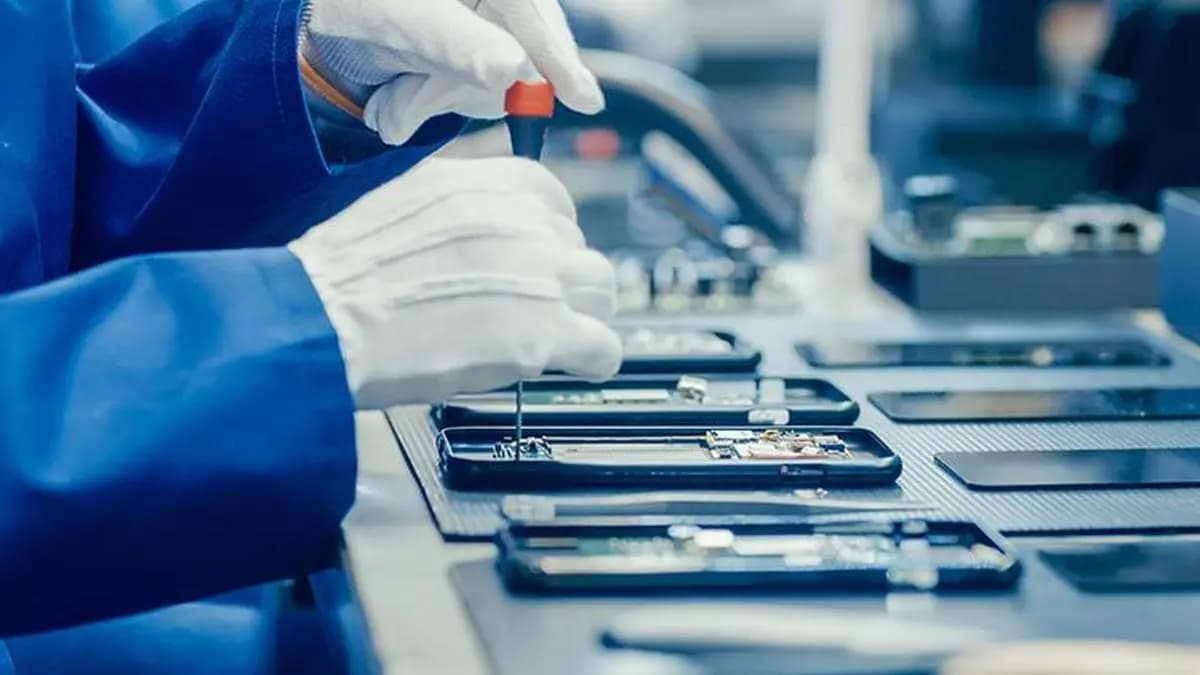

India's Ascendancy in Global Smartphone Manufacturing
India is rapidly positioning itself as a global powerhouse in smartphone manufacturing, with exports reaching a staggering $30 billion in 2025. This growth is not merely a statistic; it represents a seismic shift in the electronics sector, which has now become the country's third-largest export category. The hidden mechanism driving this transformation is a combination of government initiatives, robust investment, and a burgeoning domestic market.
The Mechanics Behind the Growth
Inside the machine of India's electronics sector, a remarkable 11-fold increase in exports since 2014-15 underscores the effectiveness of strategic policies. The government’s Production-Linked Incentive (PLI) Scheme for Large Scale Electronics Manufacturing has attracted over ₹13,475 crore in investments, catalyzing a production surge to ₹9.8 lakh crore. This is not just about numbers; it’s about creating a sustainable ecosystem for growth.
Job Creation and Economic Impact
The implications of this growth are profound. With 25 lakh new jobs created, the sector is not only enhancing employment rates but also fostering strong participation from women and opportunities for Micro, Small, and Medium Enterprises (MSMEs). The government’s focus on long-term skilling for the youth is a strategic move to ensure that the workforce is equipped to meet future demands.
Production Insights: The Shift to Local Manufacturing
What they aren't telling you is that India has become the second-largest mobile manufacturing nation globally, with production units skyrocketing from just 2 in 2014-15 to nearly 300 today. This shift has resulted in 99.2% of mobile handsets sold in India being manufactured domestically. The production of mobile devices alone has surged from ₹0.18 lakh crore to ₹5.5 lakh crore, with exports climbing from a negligible ₹0.01 lakh crore to ₹2 lakh crore.
Future Outlook: Building a Comprehensive Ecosystem
The government’s initial focus was primarily on finished products, but the narrative is evolving. There is a concerted effort to build capacity for modules, components, sub-modules, and raw materials. The Electronics Component Manufacturing Scheme is a critical part of this strategy, aiming to create a self-sufficient supply chain that can withstand global market fluctuations.
Strategic Implications for Stakeholders
For stakeholders, this presents a dual opportunity: not only to capitalize on the growing market but also to invest in a sector that is becoming increasingly vital to India's economic landscape. The macro-trends indicate a sustained growth trajectory, driven by both domestic consumption and export potential.
Conclusion: A New Era for Indian Manufacturing
India's emergence as a global manufacturing hub for smartphones is more than just a headline; it’s a strategic pivot that could redefine the country’s economic future. As the sector continues to scale, the implications for market share, investment opportunities, and job creation will be profound, making this an essential area for strategic focus.
FAQ
India's smartphone manufacturing surge, projected to reach $30 billion in exports by 2025, signifies a major economic pivot, establishing electronics as the country's third-largest export category and presenting substantial opportunities for investment and market share growth.
The government's Production-Linked Incentive (PLI) Scheme has been instrumental, attracting significant investment and catalyzing a massive increase in electronics production. This strategic policy support has fostered a sustainable ecosystem for growth and job creation.
The focus is shifting from finished products to building domestic capacity for critical components, sub-modules, and raw materials. The Electronics Component Manufacturing Scheme is key to developing a self-sufficient supply chain, enhancing resilience against global market volatility.
The sector has generated millions of new jobs, including significant opportunities for women and MSMEs. Furthermore, the government's emphasis on youth skilling ensures a future-ready workforce, contributing to long-term economic development and stability.


