
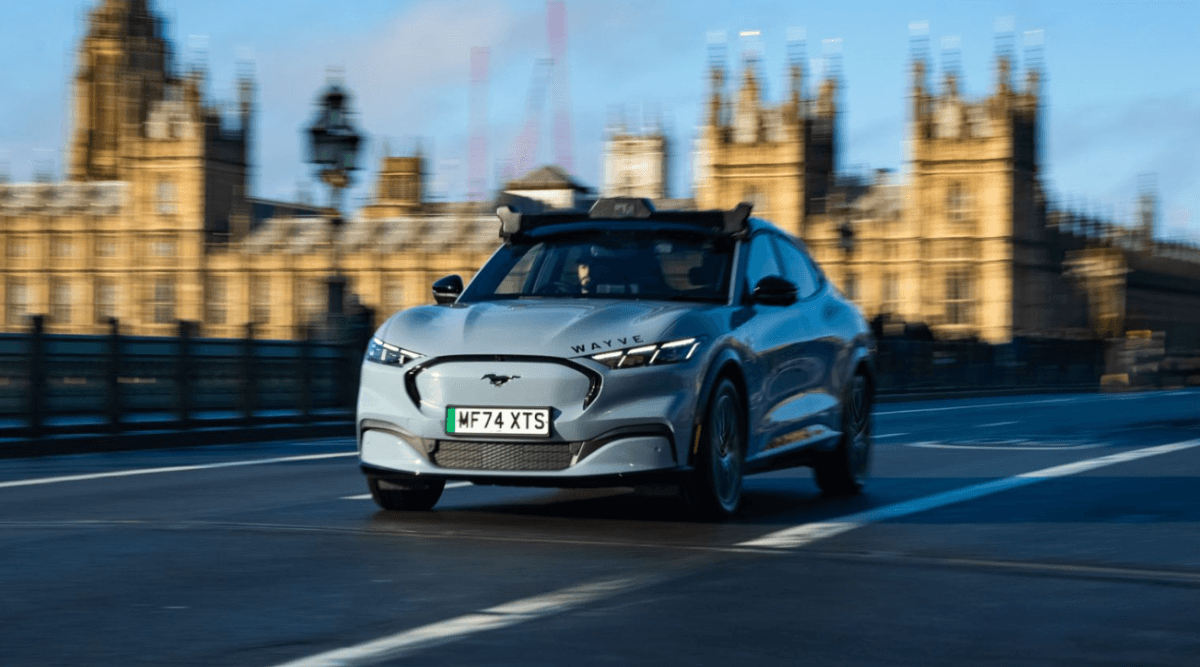

The Rise of Wayve's AI Platform
Wayve, a UK-based autonomous driving company, has recently raised $1.2 billion in a Series D funding round, pushing its valuation to $8.6 billion. This substantial investment marks a pivotal shift from AI research to the commercial deployment of its end-to-end AI platform, which aims to revolutionize the autonomous driving landscape.
Understanding End-to-End AI
Wayve's approach centers around what is known as end-to-end AI. This means that the entire process of autonomous driving—from perception to decision-making—is handled by a single AI model. Think of it as a chef who not only prepares the ingredients but also cooks and serves the meal, ensuring a seamless dining experience. This contrasts with traditional methods where different systems handle various tasks, often leading to inefficiencies.
Investment Backing and Strategic Partnerships
The recent funding round saw participation from major players like Microsoft, NVIDIA, and Uber, signaling strong industry support for Wayve's technology. These partnerships are crucial as they provide the necessary resources and expertise to accelerate the deployment of Wayve's AI Driver, which is designed to operate across various vehicle types and brands.
Market Dynamics and Competitive Landscape
As traditional automakers like Mercedes-Benz and BMW pivot away from Level 3 autonomous technologies, they are increasingly looking to collaborate with AI specialists like Wayve. This shift indicates a recognition that the automotive industry may not possess all the necessary skills to develop cutting-edge AI systems in-house. By pooling resources and aligning with experts, these companies can better position themselves against competitors like Tesla, which currently leads in full self-driving capabilities.
The Zero-Shot Learning Advantage
Wayve's technology boasts a unique feature called zero-shot learning, which allows its AI to operate in new environments without needing extensive prior training. This is akin to a traveler who can navigate a new city without a map, relying instead on general knowledge and intuition. This capability enables Wayve to deploy its autonomous systems in over 500 cities globally, significantly reducing the time and cost associated with market entry.
Commercial Deployment Plans
Starting in 2026, consumers will see Wayve-powered robotaxis in commercial trials with Uber, with plans for broader international rollouts. This partnership allows Uber to leverage Wayve's technology while maintaining operational control over the fleet, creating a scalable model for autonomous ride-hailing.
The Total Addressable Market
Wayve's CEO, Alex Kendall, emphasizes that the company is targeting a total addressable market that encompasses every vehicle on the road. This ambitious vision positions Wayve not just as a player in the autonomous vehicle sector but as a potential leader in the broader mobility landscape.
Implications for Tesla and the Industry
If Wayve's approach proves successful, it could significantly impact Tesla's market valuation, particularly if Tesla fails to maintain its lead in autonomous driving technology. The competition is intensifying, and the race to develop fully autonomous vehicles is on.
FAQ
Wayve utilizes an end-to-end AI platform, meaning a single AI model handles all aspects of autonomous driving from perception to decision-making. This contrasts with traditional methods that use multiple, separate systems, potentially leading to greater efficiency and a more integrated driving experience.
Zero-shot learning allows Wayve's AI to operate in new environments without extensive prior training, significantly reducing the time and cost associated with market entry. This enables rapid global expansion, with plans to deploy in over 500 cities.
The substantial investment and $8.6 billion valuation signal a strong market belief in Wayve's commercial viability and its end-to-end AI approach. It provides the capital and strategic partnerships (with Microsoft, NVIDIA, Uber) necessary to accelerate the transition from AI research to widespread commercial deployment of its autonomous driving technology.
Traditional automakers are increasingly outsourcing AI development, recognizing they may lack in-house expertise. Wayve's specialized AI platform and its ability to integrate across various vehicle brands make it an attractive partner for these companies looking to compete in the autonomous driving space.
Wayve plans to launch commercial trials of its robotaxis with Uber in 2026, with broader international rollouts to follow. Their ultimate ambition, as stated by their CEO, is to address the total addressable market of every vehicle on the road, positioning them as a leader in the broader mobility landscape.


