Anthropic's $30 Billion Run Rate: The Compute Bet That Redefines AI in 2026
Anthropic's run-rate revenue surged from $9 billion to $30 billion in the first quarter of 2026, a more than threefold leap in roughly four months. This is not an anomaly—it is the thesis. The company's CFO, Krishna Rao, revealed in a rare podcast appearance that compute procurement consumes 30 to 40 percent of his time, and recent commitments exceed $100 billion across Google, Amazon, and SpaceX. For executives, this signals a structural shift: the AI frontier is no longer about model architecture alone—it is about infrastructure scale and strategic compute allocation.
The Compute Trinity: Why Multi-Platform Matters
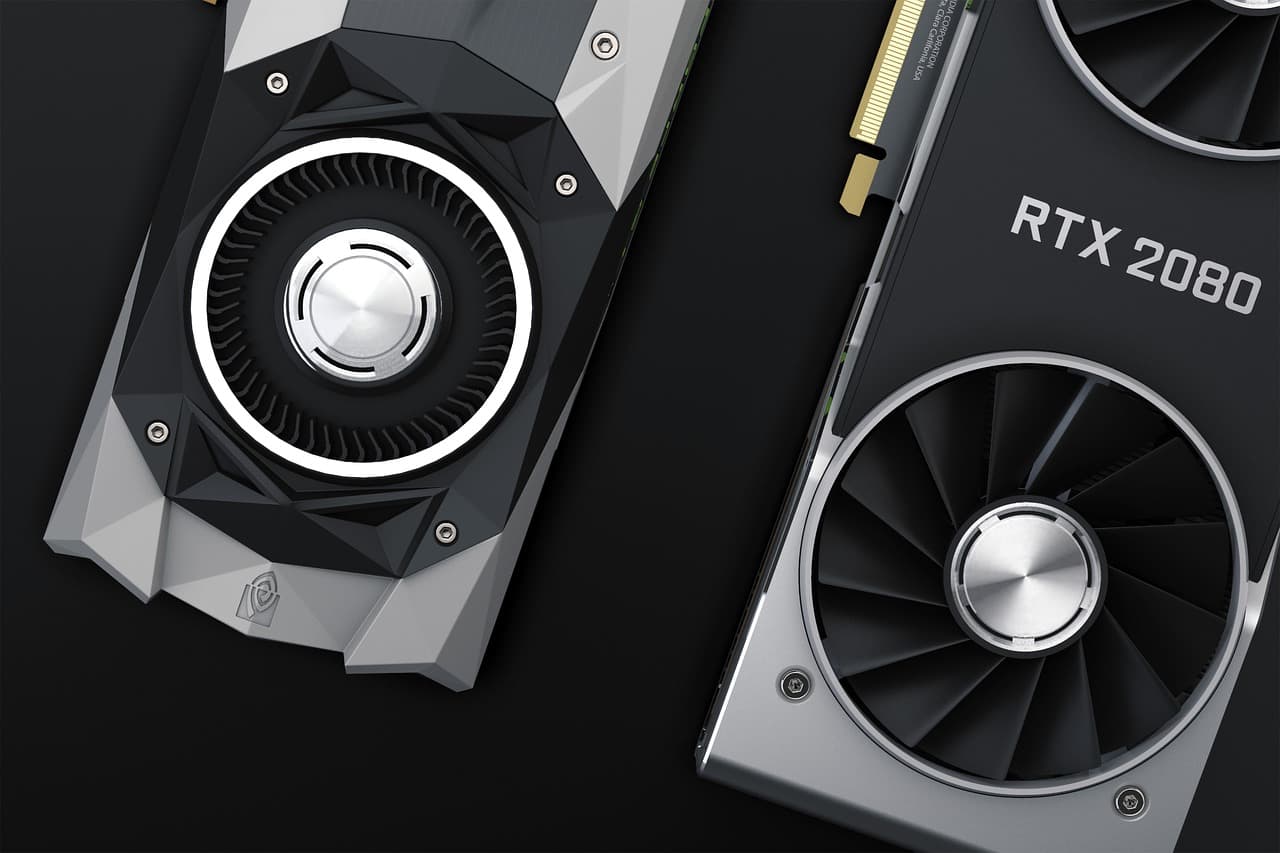
Anthropic operates across three chip platforms—Amazon's Trainium, Google's TPUs, and Nvidia's GPUs—making it the only frontier lab using all three. This flexibility is a hard-won moat, built over years of investment in compilers and orchestration that allow workloads to move fungibly across architectures. The recent five-gigawatt deal with Google and Broadcom for TPUs starting in 2027, plus a separate Amazon Trainium agreement for up to five additional gigawatts, underscores a deliberate strategy to avoid single-vendor lock-in. For Nvidia, this is a warning: even as demand for GPUs remains high, hyperscalers are diversifying. For Amazon and Google, it is a validation of their custom silicon investments. The SpaceX Colossus partnership adds near-term capacity for consumer and prosumer demand, further diversifying compute sources.
Exponential Revenue and the Jevons Paradox
Rao describes Anthropic's planning framework as a 'cone of uncertainty,' where small variations in monthly growth rates compound into wildly different outcomes. The company's net dollar retention exceeds 500 percent annually, and nine of the Fortune 10 are customers. When Anthropic cut prices on the Opus family at the launch of Opus 4.5, consumption rose far more than the price reduction predicted—a classic Jevons paradox. Efficiency gains in each model generation (Opus 4 to 4.7) simultaneously improve capability, reduce token costs, and expand margins. This creates a virtuous cycle: lower prices drive adoption, which funds more compute, which enables better models.
Enterprise Dominance and the Safety-Commercial Flywheel
Anthropic's investments in interpretability and alignment research, originally mission-driven, have become a competitive advantage in enterprise sales. The largest companies entrust Claude with sensitive data because Anthropic can demonstrate it understands what happens inside its models. This safety-commercial flywheel is difficult to replicate: it requires deep research talent and a culture that prioritizes intellectual honesty. The release of Mythos, which found 250 vulnerabilities in an open-source codebase versus 22 with a prior generation, exemplifies the dual-use challenge. Anthropic's phased release strategy—not withholding but controlled deployment—sets a template for handling capability jumps responsibly.
Culture as Moat: Talent Retention in a Poaching War
When Meta and others made aggressive talent offers, Anthropic lost only two researchers. All seven co-founders remain, and most of the first thirty employees stay. Rao attributes this to a culture of collaboration, transparency, and 'talent density over talent mass.' CEO Dario Amodei addresses the entire company every two weeks with unscripted Q&A. Every candidate must pass a culture interview. This retention is a strategic asset: in a field where talent is the ultimate scarce resource, Anthropic's ability to keep its core team gives it a compounding advantage in research continuity and institutional knowledge.
Risks on the Horizon
Rao identified three key risks: customer diffusion rates failing to keep pace with model capability, scaling laws unexpectedly flattening, and competitive pressure in agentic AI. None are guaranteed not to happen. If scaling laws plateau, the massive compute investments could become stranded assets. If competitors like OpenAI or Meta match Anthropic's agentic capabilities, the enterprise moat may erode. And if customers cannot absorb the rapid capability improvements, adoption may stall. The $100 billion compute commitments are a bet that these risks are manageable—but they also amplify downside if the bet fails.
Winners and Losers
Winners: Anthropic (revenue growth, enterprise traction, multi-platform compute), Google and Broadcom (long-term TPU deal), Amazon (Trainium agreement exceeding $100B), SpaceX (Colossus utilization), Fortune 10 enterprises (access to cutting-edge AI). Losers: Competing AI labs (market share pressure), Nvidia (reduced exclusive reliance), smaller AI startups (insurmountable barriers to compute and talent).
Second-Order Effects
The multi-platform compute strategy will accelerate commoditization of AI chips, forcing Nvidia to innovate faster or lose share. Hyperscalers will increasingly offer custom silicon as a service, reshaping the cloud AI market. Anthropic's phased release model for powerful models may become an industry standard, influencing regulatory frameworks. The talent retention success will pressure competitors to improve culture and compensation, potentially raising industry-wide costs.
Market and Industry Impact
The AI infrastructure market is shifting from single-vendor dependence to diversified, hyperscale partnerships. Anthropic's $100B commitments signal that compute is the new oil, and those who control it control the frontier. For investors, this means evaluating AI companies not just on model quality but on compute strategy and supply chain resilience. For enterprise buyers, Anthropic's safety-commercial flywheel offers a lower-risk path to AI adoption, potentially accelerating enterprise AI penetration.
Executive Action
- Evaluate your AI vendor's compute strategy: single-platform dependence is a risk; multi-platform flexibility is a moat.
- Monitor Anthropic's phased release approach for capability jumps—it may become a template for responsible AI deployment in your industry.
- Assess your own talent retention practices: in a poaching war, culture is a competitive advantage that compounds.
Why This Matters
Anthropic's $30B run rate and $100B compute bets are not just corporate milestones—they are a signal that the AI industry is entering a new phase where infrastructure scale and strategic allocation determine winners. Executives who ignore this shift risk being locked out of the frontier, while those who act can secure a multi-year advantage.
Final Take
Anthropic is not just an AI lab; it is a compute empire in the making. Its multi-platform strategy, enterprise flywheel, and talent retention create a structural moat that competitors will struggle to breach. The question is not whether the bet pays off, but whether the risks of scaling laws and adoption can be managed. For now, the cone of uncertainty keeps widening—and Anthropic is betting it all on compute.
FAQ
Anthropic's run rate surged from $9B to $30B in Q1 2026 due to exponential enterprise adoption (9 of Fortune 10 as customers), net dollar retention above 500%, and efficiency gains that lowered prices and drove usage via Jevons paradox.
By using Amazon Trainium, Google TPUs, and Nvidia GPUs, Anthropic avoids single-vendor lock-in, gains flexibility, and secures massive capacity ($100B+ deals). This is hard to replicate due to years of investment in cross-platform orchestration.
Key risks include customer adoption not keeping pace with model capability, scaling laws flattening, and competitive pressure in agentic AI. These could strand $100B compute investments or erode market position.