
Understanding the Groningen Project's Downfall
The recent halt of Equinor's blue hydrogen project in Groningen is not merely a tale of engineering challenges or public dissent; it is fundamentally a reflection of market dynamics and customer demand. The absence of long-term contracts from industrial buyers proved fatal for the H2M project, despite its robust technical framework and EU Innovation Fund backing. The project's anticipated output of 210,000 to 220,000 tons of hydrogen annually would have represented a significant share of the Netherlands' hydrogen consumption, yet it was not enough to secure the necessary investment.
The Hidden Mechanism of Blue Hydrogen
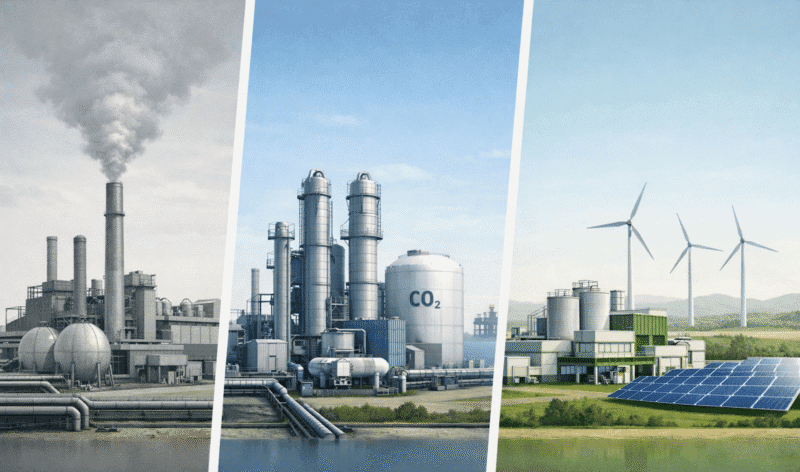
Inside the machine of blue hydrogen production, natural gas sourced from Norway would undergo a complex process involving autothermal or steam methane reforming. This method generates hydrogen while capturing CO2 emissions for storage and transport back to Norway. However, the intricacies of this supply chain, including multiple transport and compression stages, raise questions about economic viability and long-term sustainability. The Northern Lights project, designed for CO2 storage, relies heavily on a steady pipeline of industrial clients willing to commit to long-term contracts, a scenario that is now in jeopardy.
What They Aren't Telling You About Carbon Capture
While carbon capture and storage (CCS) technology has been touted as a solution for reducing emissions, the reality is more complex. The anticipated sequestration potential may be significantly overestimated, with recent studies suggesting that it could be only a fraction of earlier projections. This casts doubt on the viability of blue hydrogen as a long-term solution for decarbonization, especially when alternatives like biomethane and green hydrogen are emerging as more promising options.
The Economics of Ammonia Production
Ammonia, primarily produced from natural gas, is a major industrial emission source, with global production reaching approximately 180 million tons annually. The current production methods emit around 2.4 tons of CO2 per ton of ammonia, a significant target for decarbonization efforts. If blue hydrogen were to be used for ammonia production in Rotterdam, emissions could be reduced but would still leave a substantial carbon footprint compared to green alternatives.
Comparative Analysis: Blue vs. Green Ammonia
When evaluating the emissions associated with blue ammonia production, estimates suggest a range of 0.6 to 1.8 tons of CO2e per ton of ammonia, a partial reduction compared to the 2.7 to 3.2 tons emitted by grey ammonia. In contrast, green ammonia produced through electrolysis in regions with abundant renewable energy sources, such as Morocco, offers a near-zero emissions profile. The operational emissions from green ammonia are minimal, leading to a total CO2e output of just 0.03 to 0.11 tons per ton.
Cost Considerations and Market Dynamics
In terms of cost, blue ammonia may appear more attractive at a price of $650 per ton compared to green ammonia at $900. However, the abatement cost for blue ammonia is approximately $33 per ton of CO2e avoided, while green ammonia's cost rises to about $107 per ton. As carbon pricing continues to evolve within the EU, the competitiveness of grey ammonia diminishes significantly, especially as carbon prices approach €200 to €300 per ton.
The Future of Hydrogen in Europe
As the market adjusts to tightening carbon budgets, industrial buyers are increasingly wary of committing to partial decarbonization solutions like blue hydrogen. The Groningen project's failure to secure customers highlights a critical shift in market expectations: incremental reductions may no longer suffice in a world demanding near-zero emissions. This signals a strategic pivot towards importing green intermediates, such as low-carbon ammonia, which can maintain industrial competitiveness while minimizing carbon exposure.
FAQ
The primary reason is the lack of long-term contracts from industrial buyers. Despite technical feasibility and funding, projects cannot secure investment without guaranteed customer demand for their hydrogen output.
Carbon capture for blue hydrogen is not a complete solution. Studies suggest sequestration potential may be overestimated, leading to significant residual emissions. Green hydrogen, produced with renewable energy, offers a near-zero emissions profile, making it a more sustainable long-term decarbonization option.
As carbon prices rise in the EU, the competitiveness of traditional grey ammonia diminishes significantly. While blue ammonia offers partial emissions reduction, its higher abatement cost per ton of CO2e and residual emissions make green ammonia, despite its current higher upfront cost, a more strategically sound investment for long-term industrial competitiveness and meeting near-zero emission targets.
Industrial buyers are increasingly prioritizing near-zero emission solutions over partial decarbonization. The failure of projects relying on blue hydrogen highlights a market pivot towards importing green intermediates like low-carbon ammonia, which better aligns with tightening carbon budgets and the demand for genuine decarbonization.