

Executive Summary
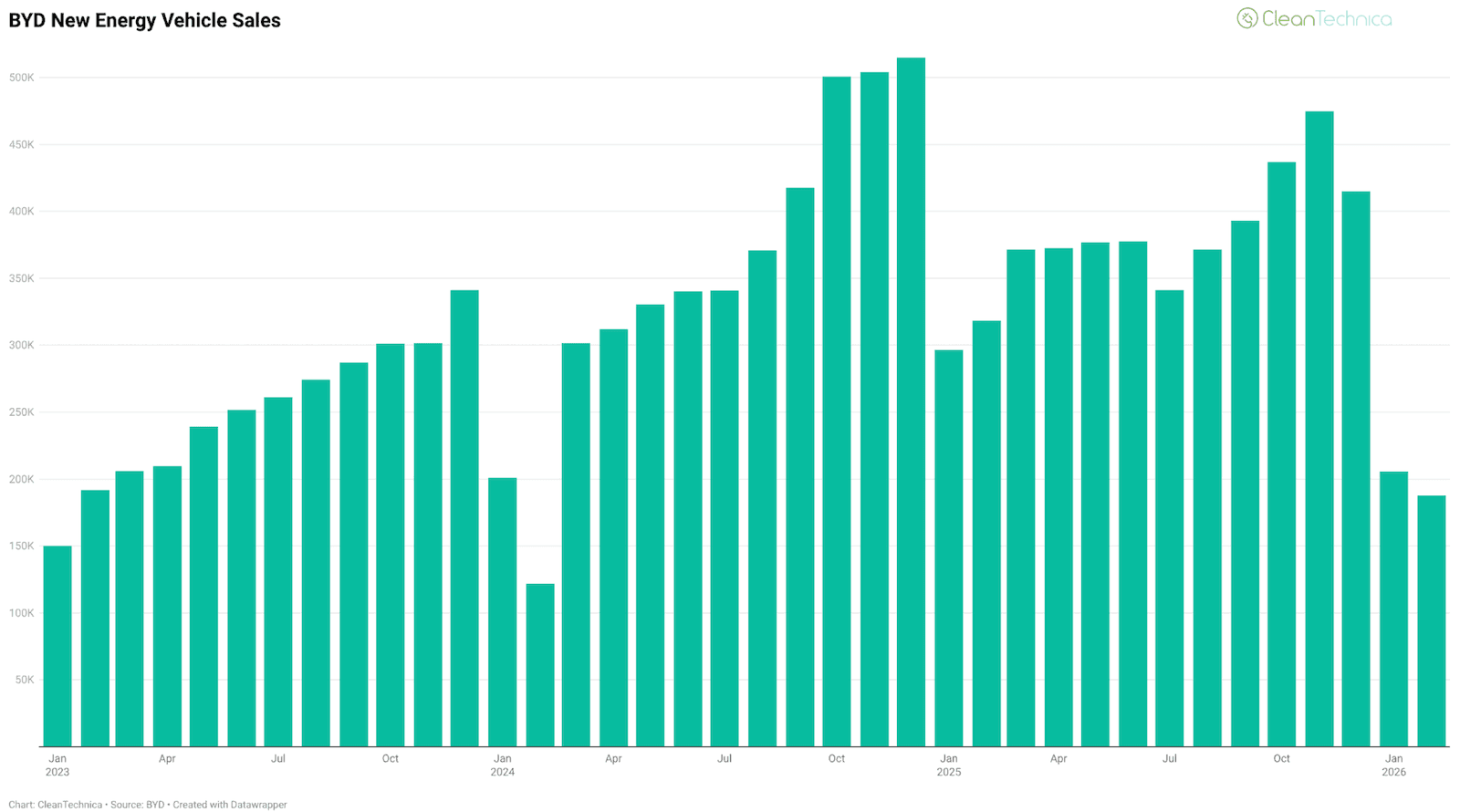
BYD, a major player in the electric vehicle (EV) sector, has reported a substantial decline in sales for February 2026, continuing a troubling trend observed in the Chinese EV market. The company's pure electric passenger vehicle sales plummeted by 36.3% year over year, while plug-in hybrid electric vehicle (PHEV) sales saw an even steeper decline of 44%. This downturn is compounded by a broader reduction in the sales of new energy vehicles (NEVs) and commercial vehicles, signaling potential challenges for BYD as it navigates a competitive landscape. The implications of these sales figures extend beyond immediate revenue concerns, affecting investor confidence, market positioning, and strategic direction for the remainder of the year.
Key Insights
- BYD's pure electric passenger vehicle sales fell to 79,539 units in February 2026, marking a 36.3% decrease compared to the same month last year.
- Combined sales for January and February 2026 show a 35% year-over-year decline.
- PHEV sales were down 44% in February, totaling 108,243 units, with a 36.7% decline when combining the first two months of the year.
- Total NEV sales reached 187,782 units in February, reflecting a 41% decrease year over year.
- Commercial vehicle sales also suffered, with all-electric bus sales down 26.3% in February, while non-bus commercial vehicle sales plummeted by 50.1%.
Strategic Implications
Industry Impact
The significant drop in BYD's sales figures underscores a broader challenge within the Chinese electric vehicle market. As competition intensifies, particularly from domestic and international players, BYD's ability to maintain its market share is increasingly in question. The decline in sales, particularly in the PHEV segment, suggests that consumer preferences may be shifting, possibly favoring fully electric vehicles or alternative brands. This transition could catalyze a reassessment of product offerings and marketing strategies across the industry.
Investor Considerations
For investors, BYD's sales downturn raises immediate concerns regarding the company's growth trajectory and profitability. The stark decline in sales could lead to a reevaluation of BYD's financial health and market position. Investors may perceive this as a risk factor, potentially affecting stock performance and investment strategies. However, the presence of optimism regarding recovery in subsequent months, as noted in prior analyses, could present an opportunity for discerning investors to capitalize on potential rebounds in sales and market performance.
Competitive Landscape
Competitors in the EV sector may view BYD's sales decline as an opportunity to capture market share. Brands that can effectively position themselves as alternatives to BYD, particularly in the PHEV and NEV segments, may benefit from consumers' shifting preferences. Additionally, established players and new entrants alike may ramp up marketing and innovation efforts to attract buyers disillusioned by BYD's recent performance. This competitive dynamic could lead to a more fragmented market, with varying degrees of success among different manufacturers.
Policy Considerations
Government policies aimed at promoting electric vehicle adoption may play a crucial role in shaping the future landscape for BYD and its competitors. As China continues to push for increased EV penetration, regulatory support could either mitigate the impacts of sales declines or exacerbate competitive pressures. Policymakers may need to consider adjustments to incentives or subsidies that could help stabilize the market and support manufacturers facing significant sales challenges.
The Bottom Line
BYD's substantial sales decline in early 2026 signals a critical juncture for the company and the broader electric vehicle market. As competition intensifies and consumer preferences evolve, BYD must navigate these challenges strategically to regain momentum. The implications for investors, competitors, and policymakers are profound, necessitating a careful assessment of market dynamics and potential recovery strategies moving forward.
FAQs
- What caused the decline in BYD's sales? The decline is attributed to increased competition in the EV market, shifting consumer preferences, and the timing of the Chinese New Year.
- How does BYD's sales performance compare to its competitors? BYD's significant sales drop may provide competitors an opportunity to capture market share, particularly in the PHEV and NEV segments.
- What are the implications for investors in BYD? Investors may need to reassess their strategies given the potential risks associated with BYD's declining sales and market position.
- How might government policies affect BYD's recovery? Regulatory support for electric vehicle adoption could either help stabilize BYD's sales or increase competitive pressures depending on policy adjustments.
- What strategies might BYD pursue to recover sales? BYD may need to innovate its product offerings and enhance marketing efforts to appeal to changing consumer preferences.
Source: CleanTechnica


