
Germany's Hydrogen Fuel Strategy Faces Economic Reality Check
The focus on hydrogen fuel in Germany is increasingly scrutinized as economic realities clash with ambitious targets. The Bundesrat's recent push to double green hydrogen fuel quotas appears less about accelerating decarbonization and more about manufacturing demand for an infrastructure that lacks a solid economic foundation.
Inside the Machine: Flawed Economic Foundations
The Bundesrat's proposal to expand hydrogen fuel quotas raises critical questions about market efficiency. This move signals a desperation to salvage investments already made rather than a genuine ambition to meet climate goals. The reality is stark: the economic viability of hydrogen fuels has been questionable from the outset, heavily reliant on subsidies that distort market signals.
The Hidden Mechanism: Subsidies and Demand Signals
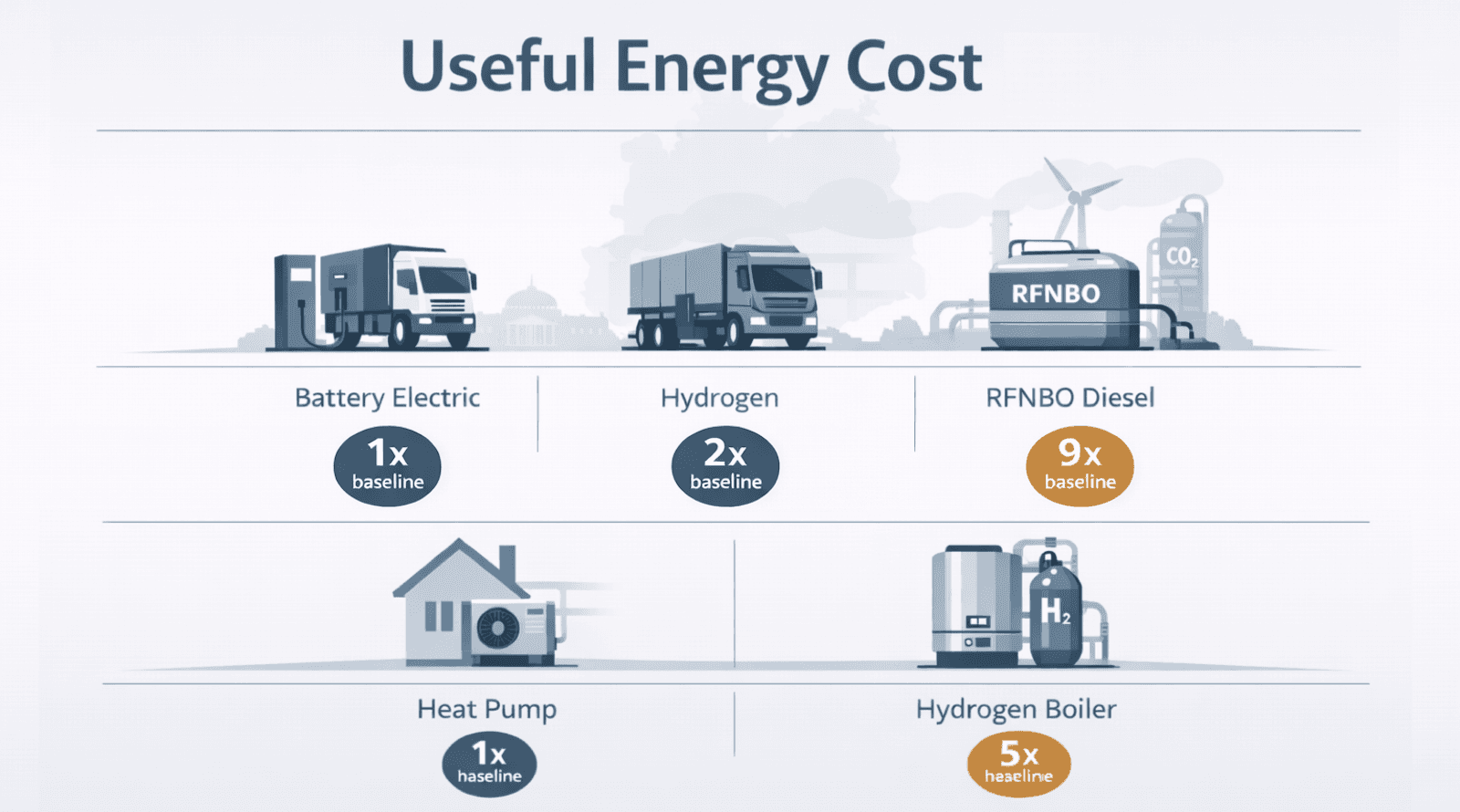
Independent fiscal institutions in Germany and France have raised alarms about the high costs associated with hydrogen strategies for transport. The French national audit office reported that the cost per ton of CO2 avoided using electrolytic hydrogen ranges between €400 and €520, significantly higher than direct electrification alternatives. This discrepancy highlights the inefficiency of hydrogen in the transport sector, where battery electric trucks already show a lower total cost of ownership.
What They Aren't Telling You: The Cost Disparity
Current market dynamics reveal a troubling trend. Historical pricing for natural gas in Germany was around €4 per gigajoule, while projected prices for green hydrogen hover between €58 and €92 per gigajoule. This cost disparity raises serious questions about the long-term viability of hydrogen as a competitive fuel source.
Infrastructure Risks: A Burden on Taxpayers
Germany's hydrogen strategy is further complicated by the financial implications of its infrastructure investments. The Federal Audit Court's assessment indicates that both supply and demand for green hydrogen have lagged significantly, despite billions in federal funding. With state-backed loans of up to €24 billion tied to future network utilization, taxpayers face considerable risk if demand fails to materialize.
Reevaluating Hydrogen's Role: A Narrower Focus
The consensus among independent auditors and economic advisory councils suggests a more pragmatic approach to hydrogen. They advocate for its use in specific industrial applications where electrification is not feasible, rather than broad mandates for road freight. This shift reflects a growing recognition that the current hydrogen strategy is misaligned with market realities.
Electrification: The Winning Strategy
As operators increasingly opt for battery electric solutions, the evidence is compelling. Surveys indicate that freight operators are prioritizing electrification due to its clear cost advantages. Battery electric trucks convert energy more efficiently than hydrogen fuel cell trucks, leading to lower operational costs.
Conclusion: Redirecting Support for Effective Solutions
The push to expand hydrogen quotas without credible demand or cost competitiveness is a misguided strategy that risks entrenching uneconomic assets. The European Union should focus on supporting pathways that demonstrate clear cost and adoption evidence, such as electrification and high-power charging infrastructure.
FAQ
The strategy is heavily reliant on subsidies, creating artificial demand and masking the fundamental economic non-viability of hydrogen fuels, particularly in the transport sector, where direct electrification offers a more cost-effective solution.
Independent audits indicate that avoiding a ton of CO2 with electrolytic hydrogen in transport costs significantly more (€400-€520) than direct electrification, and battery electric trucks already demonstrate a lower total cost of ownership.
Despite billions in federal funding, both supply and demand for green hydrogen have lagged. Taxpayers face considerable risk from state-backed loans totaling up to €24 billion if the projected demand for this infrastructure fails to materialize.
The consensus suggests focusing hydrogen's application on specific industrial sectors where electrification is not feasible, rather than broad mandates for sectors like road freight where electrification is proving more economically viable and efficient.