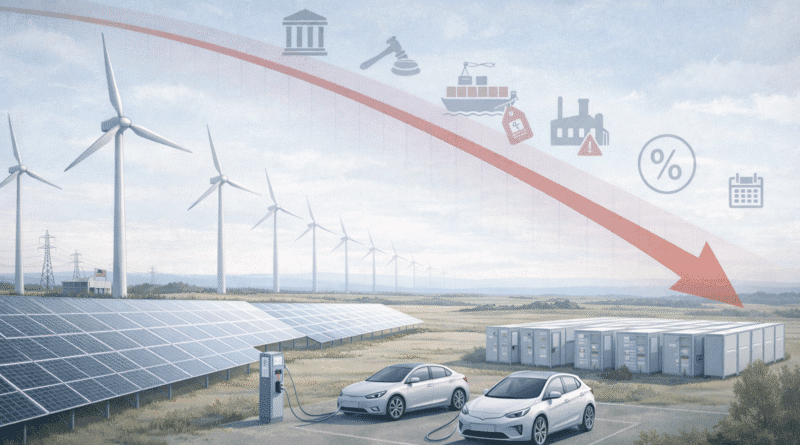

The End of Dependency on Foreign Battery Supply
The focus on local cleantech manufacturing, particularly in the battery sector, is becoming increasingly critical for Europe’s economic and military security. The Industrial Accelerator Act (IAA) serves as a pivotal framework to establish a resilient battery industry within the EU. As the urgency for local content criteria intensifies, the EU stands at a crossroads where it must decide to either fortify its domestic capabilities or risk losing its competitive edge.
2030 Outlook: The New Era of Battery Production
By 2030, the landscape of battery manufacturing in Europe is projected to undergo a significant transformation. The call for 'Made in EU' requirements by 19 companies and associations highlights a collective push towards local production. This initiative is not merely about compliance; it is about creating a robust business case that attracts private capital and ensures the survival of European battery manufacturers like ACC, Powerco, and Verkor.
Strategic Design of Union Content Criteria
Designing effective Union content criteria is complex but essential. The EU must prioritize strategic technologies, focusing specifically on batteries while avoiding unnecessary inclusions that do not pose significant risks. A component-based approach is vital, ensuring that critical materials like cathode active materials (pCAM) are included in the local content criteria. This will not only support local manufacturing but also enhance recycling capabilities, closing the loop in the battery value chain.
Investment Conditions: A New Framework for Foreign Investment
As foreign investments flood into Europe’s battery sector, particularly from Chinese firms, the need for stringent Foreign Direct Investment (FDI) conditions has never been more pressing. The proposed framework aims to ensure that over 50% of joint ventures are European-owned, thereby safeguarding EU interests. This includes mandatory skill transfers and obligations to source from local suppliers, which collectively enhance Europe’s industrial sovereignty.
Economic Implications: Balancing Costs and Competitiveness
While the transition to local content criteria may initially increase costs for electric vehicles (EVs) by approximately €650–€1,600 per vehicle, this is a small price to pay for long-term resilience and competitiveness. The projected decline in costs due to scaling and productivity gains in battery manufacturing will further offset these initial investments, making the case for local production compelling.
Public Support: A Key Lever for Change
Currently, over 70% of new EVs in Europe benefit from public support, yet almost none of this is tied to European production. The IAA must rectify this by linking public funding to compliance with local content criteria, thus driving the shift towards domestic manufacturing. This strategic alignment will not only bolster the local industry but also enhance the EU’s position in the global market.
FAQ
The primary strategic imperative is to enhance Europe's economic and military security by reducing dependency on foreign supply chains, especially for critical components like batteries. The Industrial Accelerator Act (IAA) is a key initiative to build a resilient domestic battery industry and maintain a competitive edge.
The 'Made in EU' requirements are designed to create a robust business case for local battery production, attracting private capital and ensuring the survival and growth of European manufacturers. This initiative is crucial for meeting projected demand and fostering a self-sufficient battery ecosystem by 2030.
The strategic rationale is to prioritize critical technologies like batteries and ensure that essential components, such as cathode active materials (pCAM), are manufactured locally. This approach supports domestic production, enhances recycling capabilities, and strengthens the entire battery value chain, while avoiding unnecessary inclusions.
The EU plans to implement stringent Foreign Direct Investment (FDI) conditions, including a framework requiring over 50% European ownership in joint ventures. This will ensure mandatory skill transfers and obligations for local sourcing, thereby enhancing Europe's industrial sovereignty and securing its strategic interests.
While the transition may initially increase EV costs by €650–€1,600 per vehicle, this is considered a necessary investment for long-term resilience and competitiveness. Projected cost reductions from scaling and productivity gains in local battery manufacturing are expected to offset these initial increases, making the shift economically viable.