
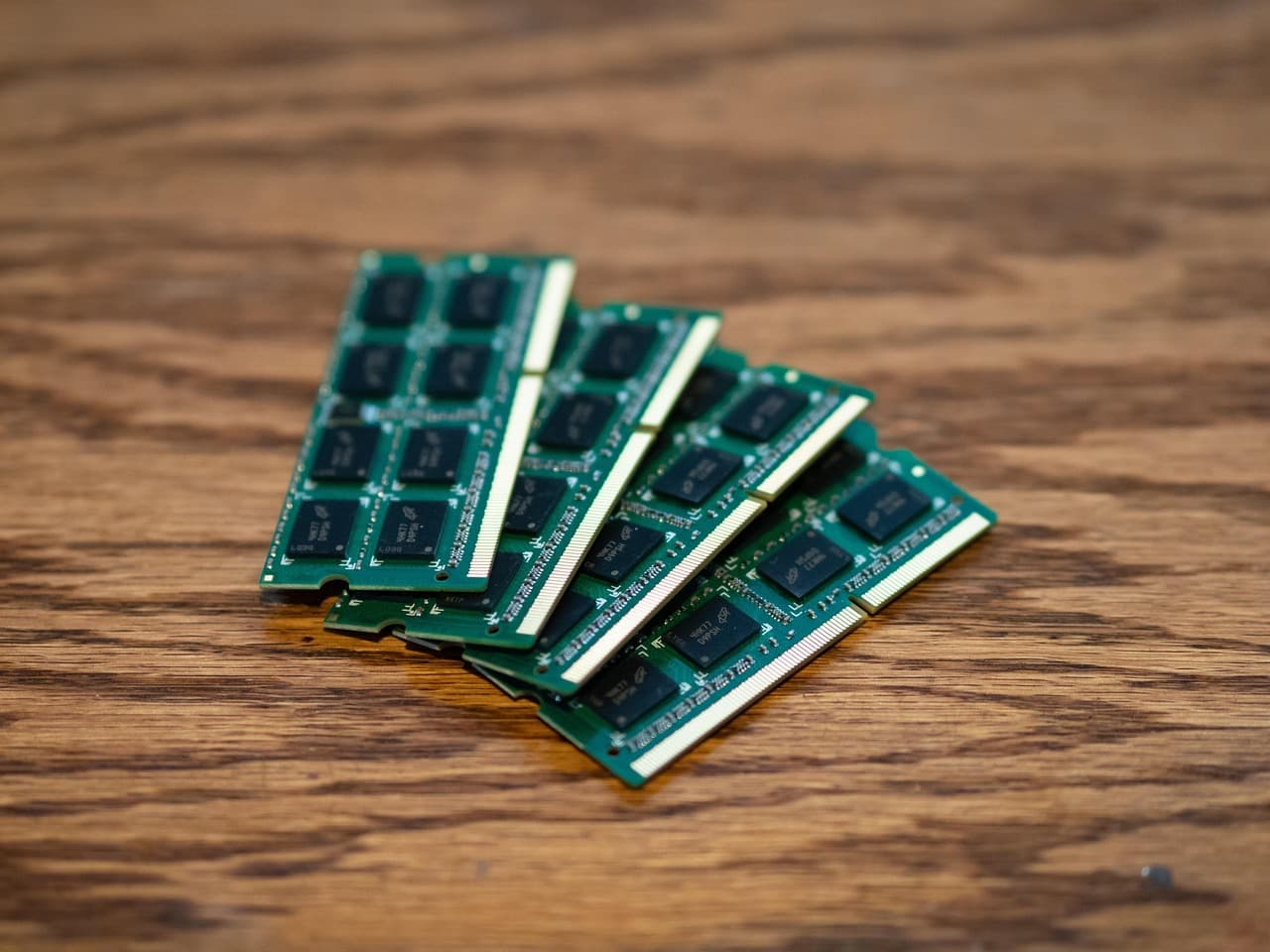

Micron has transformed from a commodity memory supplier into a linchpin of the AI infrastructure buildout. The Boise-based chipmaker’s market cap briefly surpassed Meta and Tesla, closing Friday at $1.27 trillion, after a 236% stock surge in the past month. Revenue quadrupled year-over-year to $41.45 billion, with profits leaping from $1.88 billion to $28.2 billion. This is not a cyclical uptick—it signals a fundamental reordering of the semiconductor value chain, where memory has become a strategic bottleneck for AI.
Why Memory Became the New AI Constraint
AI servers require magnitudes more memory than traditional computing. High-Bandwidth Memory (HBM) is now as critical as GPUs. The supply crunch—dubbed RAMageddon—is predicted to persist into 2027. Micron’s long-term agreements with Nvidia and Anthropic, plus 14 other strategic customer agreements, lock in demand and insulate the company from the cyclical downturns that historically plagued memory makers. This structural shift means memory pricing is no longer purely market-driven; it is now negotiated in multi-year contracts, providing revenue visibility that Wall Street rewards.
Who Gains and Who Loses in the Memory Gold Rush
Winners: Micron’s strategic customers—Nvidia, Microsoft, Amazon, Google, Meta, Oracle—secure critical supply. Micron itself gains pricing power and stable cash flows. Losers: PC and device makers like Dell and HP face higher costs and shortages. Competing memory makers Samsung and SK Hynix risk losing share if they cannot match Micron’s HBM capacity. Consumers will pay more for electronics as memory costs rise.
The Strategic Implications for the Semiconductor Industry
Micron’s rise signals that memory is evolving from a commodity to a strategic asset. Long-term supply agreements are becoming the norm, reducing volatility but also creating lock-in. This could lead to vertical integration—hyperscalers may acquire memory capacity. The US government may view Micron as a national security asset, given its dominance in a critical AI component. Competitors will race to expand HBM production, potentially leading to oversupply post-2027.
What Executives Should Watch Next
Monitor Micron’s fourth-quarter revenue guidance ($49-51 billion) and any new strategic agreements. Watch for capacity expansion announcements from Samsung and SK Hynix. The sustainability of Micron’s valuation depends on whether AI memory demand remains robust through 2027. If hyperscalers slow their buildout, the memory glut could return. For now, Micron has rewritten the rules of the memory market.
Rate the Intelligence Signal
Intelligence FAQ
AI-driven demand for High-Bandwidth Memory (HBM) created a supply crunch (RAMageddon), pushing Micron’s revenue to $41.45B and profits to $28.2B. Wall Street sees Micron as the next Nvidia.
It depends on AI memory demand persisting through 2027. Long-term agreements with Nvidia and Anthropic provide revenue visibility, but a cyclical downturn could still occur if oversupply emerges.
Samsung and SK Hynix face pressure to expand HBM capacity. They may lose market share if they cannot match Micron’s strategic agreements and production scale.
Memory shortages are driving up prices for electronics like Apple products and Xbox consoles. Expect higher costs for devices that rely on DRAM and NAND.
 Spotify
 Apple
Apple Amazon
 YouTube

