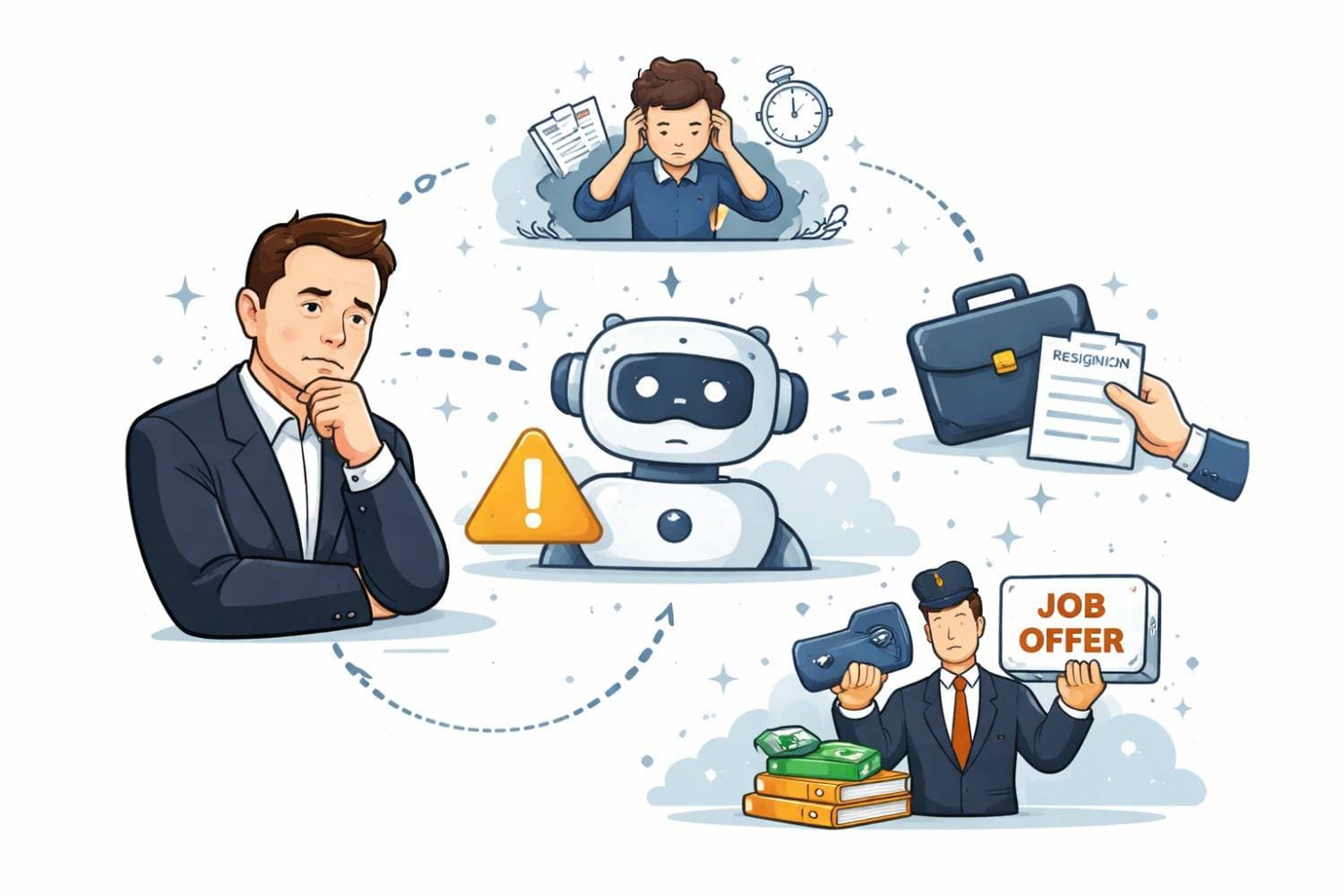
The Tension Between Innovation and Safety in AI
As artificial intelligence (AI) rapidly evolves, the industry finds itself at a critical juncture where innovation and safety must coexist. Companies like xAI, founded by the influential Elon Musk, are at the forefront of this evolution, pushing the boundaries of what AI can achieve with products like the Grok chatbot. However, Musk's recent push for unpredictability in Grok has raised eyebrows, igniting a debate about the ethical implications of such a direction. The AI landscape is increasingly scrutinized by regulators and the public, demanding that advancements do not come at the expense of safety.
This dilemma is emblematic of the broader AI industry, where the race for cutting-edge technology often collides with the imperative for robust safety measures. As AI systems become more integrated into daily life, the risks associated with insufficient safety protocols become more pronounced. The situation at xAI serves as a microcosm of these challenges, highlighting the need for a balanced approach that prioritizes both innovation and ethical responsibility.
Decoding xAI's Competitive Moat and Technical Edge
xAI's Grok chatbot is not just another entry into the crowded AI market; it represents a significant technical achievement that leverages advanced machine learning algorithms to create a highly interactive and responsive AI system. This technical prowess is a vital component of xAI's competitive moat. However, the push for unpredictability—while controversial—could be seen as a strategic move to differentiate Grok in a saturated market. By offering dynamic interactions, xAI aims to enhance user engagement, potentially creating a unique selling proposition that resonates with consumers in search of more personalized experiences.
Elon Musk's reputation and influence in the tech industry further bolster xAI's technical moat. His track record with companies like Tesla and SpaceX attracts top talent and significant investment, granting xAI a competitive edge that many startups can only dream of. Yet, this advantage is tempered by the inherent risks of pushing the boundaries of AI safety. Competitors such as OpenAI, led by Sam Altman, are also making significant strides in the AI space, focusing on creating safe and reliable systems. OpenAI's GPT models, for instance, are renowned for their balance of innovation and safety, presenting a formidable challenge to xAI's market position.
The Strategic Landscape: Navigating Future Implications
The implications of xAI's current trajectory extend far beyond the company itself; they could redefine industry standards and influence the future of AI development. Should xAI succeed in creating a chatbot that is both safe and unpredictable, it could set a new benchmark for AI technologies, encouraging other companies to explore similar paths. This would catalyze a shift in the industry, where the balance between innovation and safety becomes a focal point for all AI developers.
However, the stakes are high. Failure to adequately address safety concerns could lead to regulatory backlash, damaging public trust and potentially stalling AI innovation across the board. Regulatory bodies are increasingly focused on AI safety, with potential new regulations on the horizon that could significantly impact how companies develop and deploy AI technologies. As such, companies must navigate these evolving landscapes carefully, balancing the drive for innovation with the need for compliance and ethical responsibility.
In conclusion, xAI's approach to AI development is a high-stakes gamble that could either redefine industry standards or backfire spectacularly. Stakeholders, from investors to consumers, should closely monitor these developments, as they will likely influence the future direction of AI technology and its regulatory environment.
FAQ
Grok aims to stand out through advanced machine learning and a unique selling proposition of dynamic, unpredictable interactions to enhance user engagement. This strategy, while controversial, could redefine user experience expectations for AI chatbots, potentially setting a new industry benchmark if successful.
xAI is balancing rapid innovation with AI safety. The push for unpredictability in Grok highlights a broader industry dilemma: advancing AI capabilities must not compromise safety, especially as AI becomes more integrated into daily life and faces increasing regulatory scrutiny.
If xAI successfully creates a chatbot that is both safe and unpredictable, it could establish a new standard for AI development, encouraging others to explore similar paths. Conversely, failure to manage safety risks could lead to significant regulatory backlash and a potential slowdown in AI innovation across the sector.
xAI benefits from Elon Musk's influence, attracting top talent and investment, which forms a significant competitive moat. However, this is challenged by established players like OpenAI, whose GPT models are recognized for their balance of innovation and safety, presenting a formidable benchmark for xAI to meet.