
The End of Traditional AI Models
The emergence of sovereign AI infrastructure marks a pivotal shift in how nations approach artificial intelligence. With the announcement of a colossal AI supercomputer in India, backed by the UAE, we witness the end of reliance on foreign AI models. This new system, capable of up to 8 exaFLOPS of super sparse AI compute, is set to redefine the landscape of AI capabilities in the region.
Strategic Collaboration for National Competitiveness
In a strategic partnership, the UAE's Mohamed Bin Zayed University of AI and India's Center for Development of Advanced Computing (C-DAC) are collaborating to deploy this supercomputer. G42, a leading UAE technology firm, will oversee the installation, emphasizing the importance of national sovereignty in AI development. As G42's CEO Manu Jain stated, this project enables local researchers and businesses to become AI-native while ensuring full data sovereignty.
The Technological Edge of Cerebras Systems
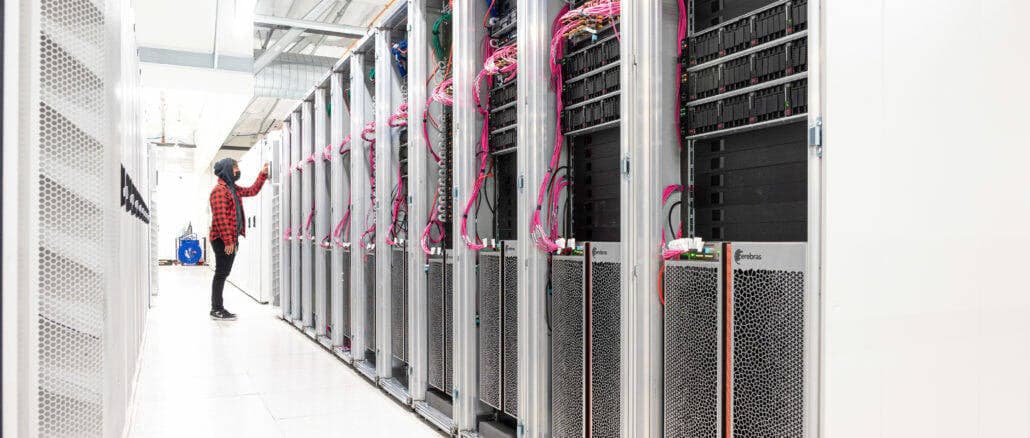
Powered by Cerebras Systems' WSE-3 wafer-scale accelerators, the supercomputer represents a significant technological advancement. Each accelerator can deliver 125 petaFLOPS of performance, leveraging on-chip SRAM instead of traditional high-bandwidth memory. This innovation positions the supercomputer to handle memory-bound AI inference workloads with unprecedented speed, potentially outperforming existing GPU-based solutions.
2030 Outlook: A New Era of AI Development
As we look toward 2030, the implications of this development are profound. The supercomputer will be accessible to Indian universities, startups, and SMEs, fostering an environment of innovation and research. This initiative not only enhances India's technological capabilities but also aligns with global trends toward data sovereignty and localized AI solutions.
Competitive Landscape Shifts
The announcement comes at a time when other tech giants, including AMD and Nvidia, are also ramping up their AI deployments in India. However, the unique positioning of the Cerebras supercomputer, with its focus on local data governance and performance efficiency, sets it apart. As nations race to establish their AI capabilities, India's move signifies a critical step toward becoming a competitive player in the global AI arena.
Conclusion: The Future of AI is Sovereign
The rise of sovereign AI infrastructure is not just a technological advancement; it is a strategic necessity for national competitiveness. As countries like India and the UAE invest in their own AI capabilities, we are witnessing the birth of a new era where data sovereignty and localized solutions take precedence over traditional models. This shift will redefine how nations approach AI, ensuring that they retain control over their data and technological futures.
FAQ
The new AI supercomputer, a collaboration between India and the UAE utilizing Cerebras Systems technology, signifies a major step towards national AI sovereignty. It reduces reliance on foreign AI models, enables local researchers and businesses to become AI-native, and ensures full data sovereignty, thereby enhancing India's position in the global AI landscape and fostering innovation among its universities, startups, and SMEs.
While other tech giants are increasing AI deployments in India, this sovereign infrastructure, powered by Cerebras wafer-scale accelerators, offers a unique advantage through its explicit focus on local data governance and efficient handling of memory-bound AI inference workloads. This positions India to potentially outperform existing GPU-based solutions and secure a competitive edge.
By 2030, this supercomputer is expected to foster a significant surge in AI innovation and research within India. Its accessibility to universities, startups, and SMEs will democratize advanced AI capabilities, aligning with global trends towards data sovereignty and localized AI development, and positioning India as a key player in the future of AI.