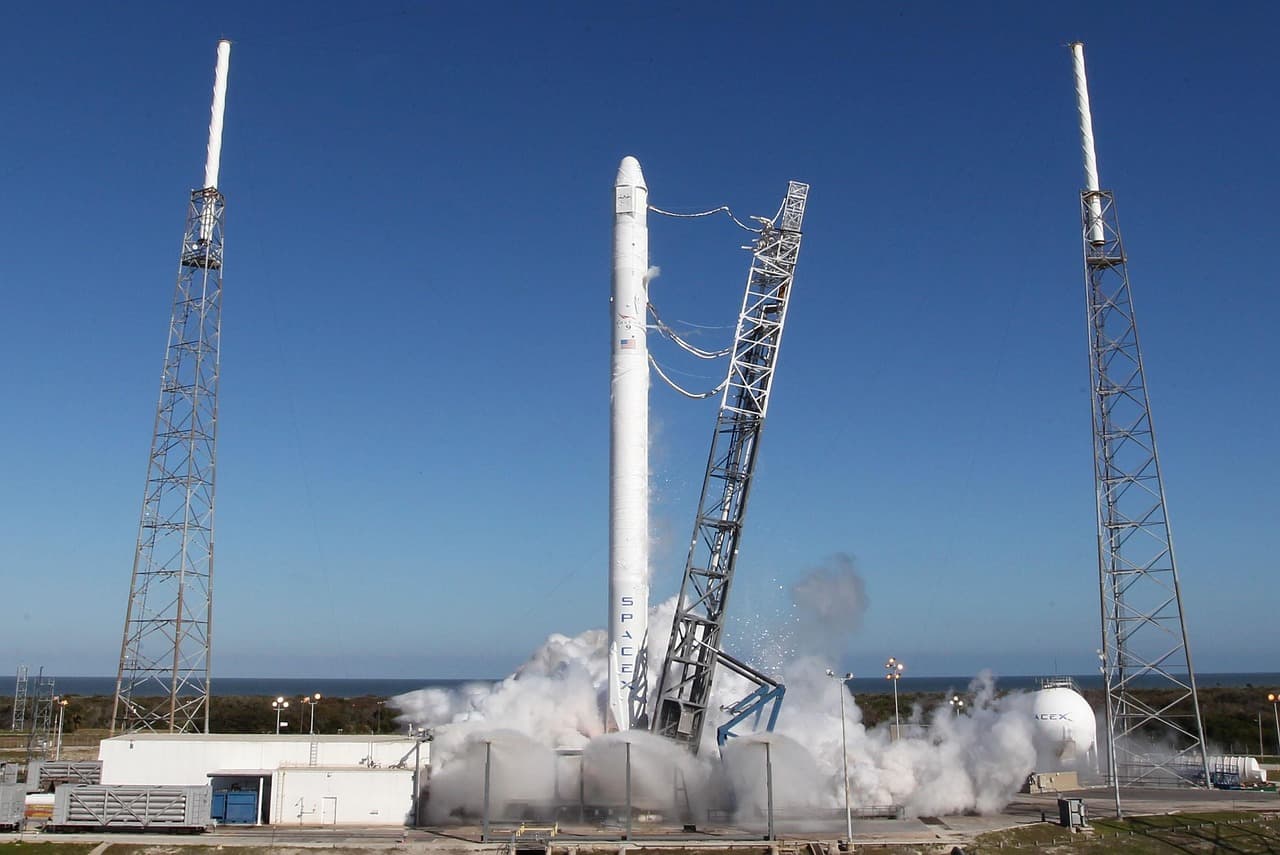
SpaceX IPO: The $1.75 Trillion Bet That Changes Everything
SpaceX is going public. The company has accelerated its IPO timeline to June 12, 2026, targeting a valuation of $1.75 trillion and aiming to raise up to $75 billion. This is not just another tech IPO; it is a structural shift in the space economy. BlackRock is reportedly considering a $5 to $10 billion anchor investment. The implications for investors, competitors, and the broader market are profound.
The Accelerated Timeline: What Happened
According to Reuters, SpaceX will announce its IPO as early as next Wednesday, followed by a roadshow starting June 4 and a share sale as early as June 11. The listing on Nasdaq is expected by June 12. This timeline is significantly faster than earlier expectations of late June or early July. The acceleration signals strong demand and confidence from institutional investors.
Strategic Analysis: Winners and Losers
Winners:
- SpaceX: Access to public capital markets will fund ambitious projects like the orbital data center (1 million satellites) and lunar city priorities. The IPO also provides liquidity for early investors and employees.
- BlackRock: A $5-10 billion investment at a $1.75 trillion valuation could yield substantial returns if SpaceX continues to dominate launch and satellite services.
- Nasdaq: Landing SpaceX boosts exchange prestige and trading volume, especially after the loss of high-profile tech IPOs to direct listings.
Losers:
- Competing space companies: Blue Origin, Virgin Galactic, and Rocket Lab face a well-capitalized rival with a massive valuation advantage. SpaceX can outspend on R&D and capacity.
- Traditional satellite operators: SpaceX's orbital data center and Starlink constellation threaten existing telecom and data relay businesses.
Second-Order Effects
The IPO will likely trigger a wave of space SPACs and secondary offerings as investors seek exposure. Regulatory scrutiny may increase, especially around satellite constellations and orbital data centers. The acquisition of xAI earlier this year adds an AI dimension, potentially integrating machine learning into satellite operations.
Market / Industry Impact
The listing could accelerate the commercialization of space, driving down launch costs and expanding satellite-based services. Traditional aerospace and defense contractors may need to pivot or partner. The $1.75 trillion valuation implies a price-to-sales multiple that will set a benchmark for future space startups.
Executive Action
- Investors: Evaluate exposure to space and satellite ETFs. Consider direct participation in the IPO if allocation is available.
- Competitors: Accelerate differentiation strategies, focus on niche markets (e.g., small satellite launch, Earth observation) to avoid direct competition.
- Regulators: Prepare for increased filings and public scrutiny of space activities, particularly around orbital debris and spectrum allocation.
Source: Engadget
Rate the Intelligence Signal
Intelligence FAQ
Starlink is likely the primary revenue driver. The IPO will force disclosure of Starlink's financials, potentially valuing it at $100B+ alone, which could justify the overall $1.75T valuation.
Key risks include regulatory delays for satellite constellations, competition from Amazon's Project Kuiper, and the high capital expenditure required for the orbital data center. The valuation leaves little room for error.
 Spotify
 Apple
Apple Amazon
 YouTube