SpaceX's $2 Trillion Valuation Pressure Test: The Strategic Reality
SpaceX's targeted $2 trillion IPO valuation represents a fundamental challenge to traditional investment metrics, forcing a reckoning between visionary capital allocation and conventional financial analysis. The company's market value is now expected to top $2 trillion, up from $1.75 trillion less than two weeks ago, placing it among the top five S&P 500 companies—Nvidia, Apple, Alphabet, Microsoft, and Amazon—despite generating only a fraction of their revenue. This development matters because it signals a potential redefinition of how markets value frontier technology companies, with implications for capital flows, competitive dynamics, and executive decision-making across multiple industries.
The Valuation Math That Doesn't Add Up
The core tension in SpaceX's IPO narrative centers on mathematical impossibility versus narrative power. Analyst estimates show a price-to-sales ratio exceeding 100-times on a trailing basis, dwarfing even Palantir Technologies' lofty 79-times ratio. Bloomberg Intelligence projects SpaceX's rocket launch and Starlink satellite businesses will generate approximately $20 billion in revenue by 2026, with xAI contributing less than $1 billion. As David Erickson, adjunct associate professor at Columbia Business School and former co-head of global equity capital markets at Barclays, states: "The reality is it's not about the fundamentals, nobody is going to get there on the fundamentals from a math standpoint because the math doesn't work."
This mathematical disconnect creates a critical inflection point for institutional investors. The $2 trillion valuation implies SpaceX would be worth more than Meta Platforms and Tesla combined, despite those companies generating substantially more revenue. The valuation surge from $800 billion in December's tender offer to the current $2 trillion target represents a 150% increase in just four months, driven largely by private market activity through special purpose vehicles that saw hundreds of millions traded in Q1 2024—double the volume of the previous six months.
The Musk Premium: Vision Versus Execution Risk
Elon Musk's personal brand represents both SpaceX's greatest asset and its most significant vulnerability. As Erickson notes, "There's nobody that's been better at selling the dream than Elon Musk." This "Musk premium" has propelled the valuation beyond what traditional metrics would support, but it creates dependency on a single individual's credibility and execution capability. The company's ambitious plans—including AI data centers in space, lunar manufacturing facilities, and the Terafab chip project jointly run with Tesla—represent what PitchBook analyst Franco Granda calls "real sci-fi initiatives" that add both upside potential and mounting risks.
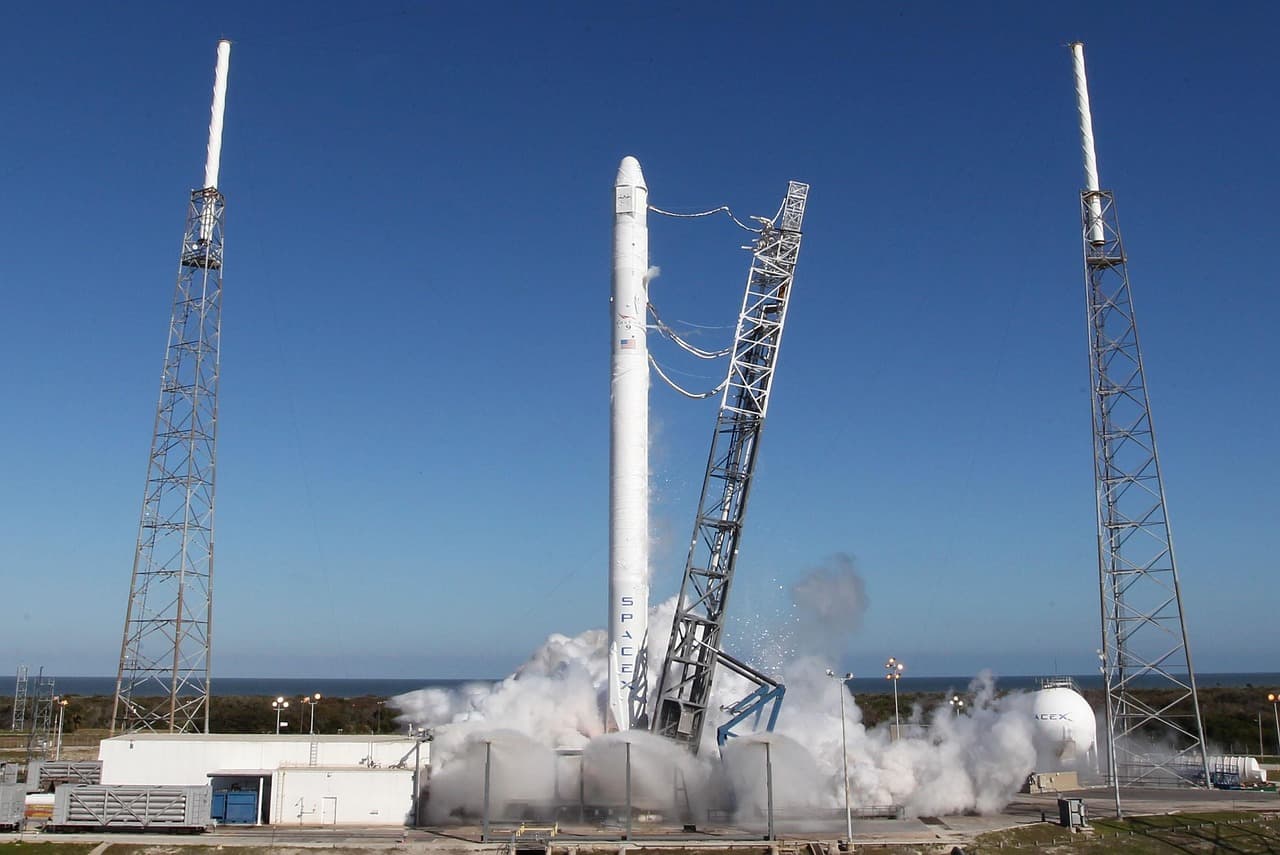
The timing of critical technical milestones adds another layer of complexity. Two rocket test launches are expected ahead of a potential June trading debut, which Granda says will be "crucial for what happens to the IPO." He warns that "if any of those two fail there's a chance the IPO might not even happen." This creates a binary outcome scenario where technical success could validate the visionary narrative, while failure could unravel the entire IPO timeline and valuation structure.
Capital Allocation Implications
A successful $75 billion IPO—which would dwarf Saudi Aramco's $29 billion 2019 record—would provide SpaceX with unprecedented capital to pursue its ambitious roadmap. The company plans to use IPO proceeds to fund Musk's vision of AI data centers in space and a factory on the moon, initiatives that require what the billionaire himself acknowledges are "unprecedented amounts of capital." This capital infusion could accelerate SpaceX's dominance in commercial space launch and satellite internet while funding expansion into adjacent markets.
However, this capital allocation creates ripple effects across Musk's ecosystem. The Terafab project's joint management between Tesla and SpaceX raises questions about resource allocation and focus. Tesla shareholders face potential dilution of management attention and capital that might otherwise support automotive and energy storage businesses. This inter-company dynamic represents a hidden risk factor that institutional investors must weigh against the potential synergies of integrated AI, robotics, and space infrastructure.
Market Structure Consequences
SpaceX's IPO represents more than just another technology listing—it signals the maturation of space technology as a legitimate asset class. The involvement of Bank of America, Citigroup, Goldman Sachs, JPMorgan Chase, and Morgan Stanley in senior IPO roles indicates institutional validation of space economics. The scheduled analyst briefing in April and broader bank syndicate call represent critical pressure-testing moments that will determine whether the $2 trillion valuation can withstand professional scrutiny.
The IPO's success or failure will establish precedent for how markets value integrated technology platforms spanning multiple frontier sectors. A successful listing at or near the $2 trillion target would validate narrative-driven valuation models and likely trigger increased investment in space technology, AI infrastructure, and other capital-intensive frontier technologies. Conversely, a failed or downsized IPO could cool investor enthusiasm for visionary projects lacking near-term revenue visibility.
Competitive Landscape Reshaping
SpaceX's capital advantage threatens to accelerate industry consolidation and competitive displacement. Traditional satellite and telecom companies face existential threat from Starlink's expanding global coverage, while competing space launch providers struggle to match SpaceX's reusable rocket technology and cost structure. The potential $75 billion capital infusion could fund vertical integration across the space value chain, from manufacturing to operations to end-user services.
Perhaps most significantly, SpaceX's valuation creates a new benchmark for technology companies pursuing ambitious, capital-intensive visions. Companies like Blue Origin, Relativity Space, and other space technology ventures will face increased pressure to demonstrate similar narrative power and execution capability. Established technology giants—particularly those in the "Magnificent 7" that SpaceX would dwarf in valuation—may face investor questions about their own growth narratives and capital allocation strategies.
FAQ
No, traditional financial metrics cannot justify this valuation—it depends entirely on investor belief in Elon Musk's visionary narrative and SpaceX's potential to dominate multiple future trillion-dollar markets simultaneously.
Elon Musk and early investors realize massive wealth creation, while investment banks collect unprecedented fees and space industry suppliers gain accelerated growth—but traditional telecom and competing launch providers face existential threat.
The IPO could be delayed or canceled entirely, as technical failures would undermine the execution credibility essential to supporting a narrative-driven $2 trillion valuation based on future capabilities.
Negatively—Tesla faces potential management distraction and capital competition as Musk's Terafab project requires joint Tesla-SpaceX resources, diluting focus on automotive and energy storage businesses.
Only for companies with similarly dominant market positions, visionary leadership, and potential to create entirely new market categories—most companies will still need to demonstrate traditional financial metrics to attract institutional capital.