
Executive Summary
- Chun Wang, co-founder of F2Pool and controller of 11.3% of Bitcoin's hashrate, has been named Mission Commander for SpaceX's first commercial Mars mission, targeted for 2026.
- SpaceX confidentially filed for an IPO at a valuation of up to $1.75 trillion, the largest in history, and disclosed holdings of 8,285 BTC.
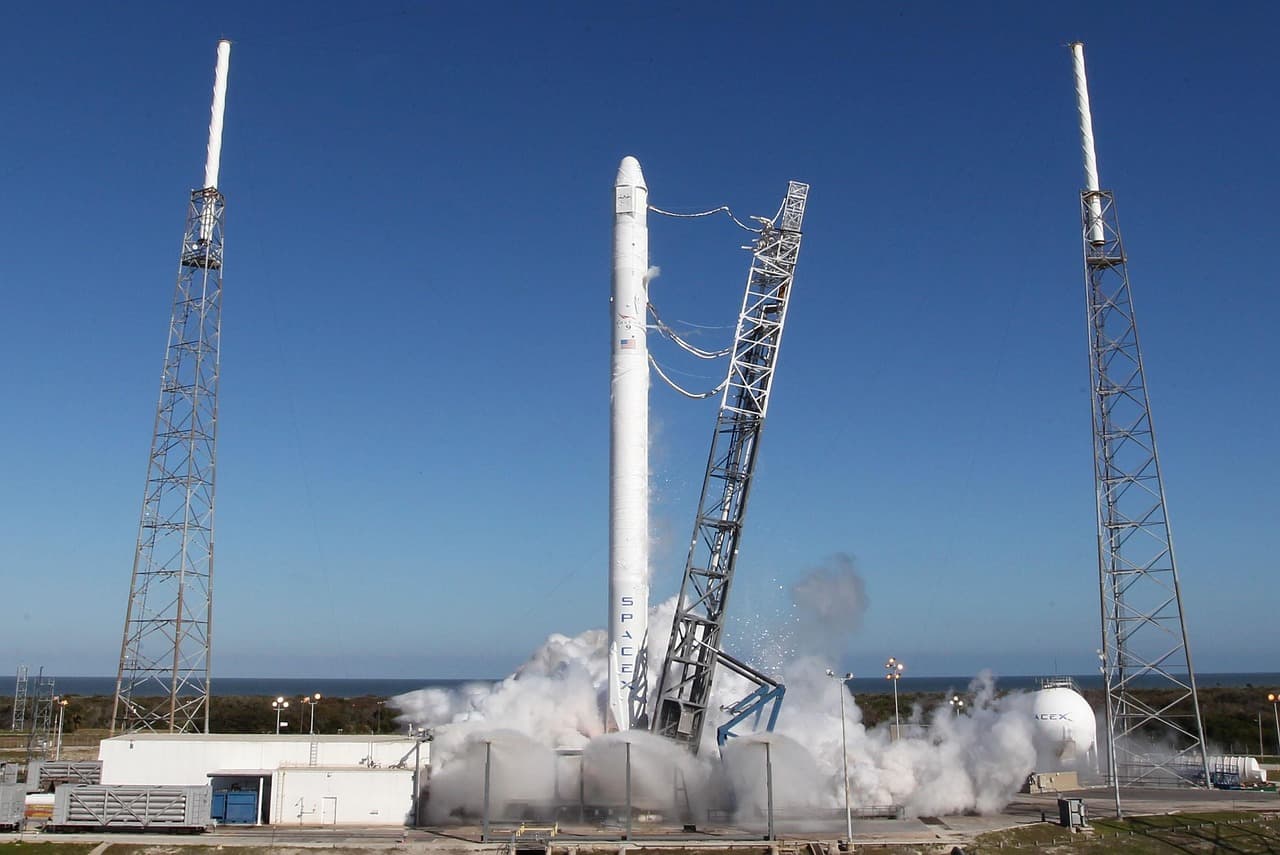
- The two-year mission will test Starship V3 architecture, deep-space operations, and biomedical telemetry critical for Elon Musk's goal of transporting one million people to Mars.
- Robinhood Crypto's COO departure and 47% YoY revenue decline highlight fragility in retail crypto platforms, contrasting with institutional moves by SpaceX and Trump Media.
Context: What Happened
On May 22, 2026, SpaceX announced that Chun Wang, a Chinese-born Maltese-Kittitian crypto investor and co-founder of F2Pool, will serve as Mission Commander for the first commercial human spaceflight to Mars. The mission, launching in 2026, includes a circumlunar flyby, high-altitude Mars flyby, and complex return trajectory over two years. SpaceX is debuting its Starship V3 architecture, featuring advanced cryogenic systems and avionics. Concurrently, SpaceX filed confidentially for an IPO targeting a $1.75 trillion valuation and disclosed a bitcoin treasury of 8,285 BTC. Separately, Robinhood Crypto's COO Tanya Denisova departed amid a 47% revenue decline, while Bitcoin traded near $77,700 with analysts eyeing $75,000 support.
Strategic Analysis
The Crypto-Space Nexus
Chun Wang's appointment is not symbolic; it represents a strategic fusion of two high-risk, high-reward sectors. F2Pool's 11.3% hashrate dominance gives Wang influence over Bitcoin's security and transaction processing. His personal bitcoin holdings exceed $300 million, making him a major stakeholder in the crypto ecosystem. By leading a Mars mission, Wang bridges the gap between digital asset wealth and physical exploration. This could attract crypto capital to space ventures, potentially funding future missions through tokenized assets or DAOs. For SpaceX, having a crypto billionaire as commander signals to investors that the company is aligned with the tech-forward, risk-tolerant ethos of the crypto community—critical ahead of its IPO.
SpaceX's IPO and Bitcoin Disclosure
SpaceX's confidential IPO filing at a $1.75 trillion valuation is unprecedented. The disclosure of 8,285 BTC (worth ~$640 million at current prices) is a strategic move to appeal to crypto-savvy investors and legitimize bitcoin as a corporate treasury asset. This follows Trump Media's $205 million bitcoin position, indicating a trend of high-profile companies using bitcoin as a store of value. For SpaceX, the IPO proceeds will fund Starship development and Mars colonization. The Mars mission serves as a proof-of-concept for rapid vehicle reuse, which is essential for reducing costs and achieving Musk's million-person goal. If successful, SpaceX could dominate the emerging space economy, from satellite internet to interplanetary transport.
Robinhood's Struggles vs. Institutional Adoption
Robinhood Crypto's 47% revenue decline and COO departure highlight the fragility of retail-focused crypto platforms. As institutional players like SpaceX and Trump Media accumulate bitcoin, retail trading volumes are shrinking. This suggests a maturation of the crypto market, where long-term holding and treasury strategies replace speculative trading. Robinhood's challenge is to pivot toward institutional services or risk obsolescence. Meanwhile, Bitcoin's low implied volatility (7-month low) and support at $75,000 indicate a market in consolidation, possibly awaiting a catalyst from the SpaceX mission or regulatory clarity.
Regulatory and Geopolitical Implications
SEC Commissioner Peirce's counterview on crypto rules suggests ongoing regulatory uncertainty. However, SpaceX's Mars mission could shift the narrative: if a crypto-linked figure leads a successful deep-space mission, it may bolster the case for crypto as a legitimate, innovative industry. Geopolitically, Wang's Chinese origin and Maltese-Kittitian citizenship complicate matters. China may view this as a loss of talent, while the U.S. benefits from his expertise. The mission could also accelerate international space cooperation or competition, particularly with China's own lunar and Mars ambitions.
Winners & Losers
Winners
- SpaceX: Gains a high-profile commander and crypto credibility ahead of its record IPO.
- Bitcoin Miners (F2Pool): Positive brand association with space exploration may attract new investment.
- Institutional Bitcoin Holders: SpaceX and Trump Media's disclosures signal mainstream acceptance, potentially driving further adoption.
Losers
- Robinhood Crypto: Revenue decline and executive departure indicate loss of market share to competitors.
- Short-term Bitcoin Traders: Low volatility and potential support breakdown could lead to losses for leveraged positions.
- Traditional Space Agencies: Private sector Mars mission may reduce government funding and prestige.
Second-Order Effects
- Crypto-Space Synergy: Expect more crypto entrepreneurs funding space ventures, possibly through tokenized assets.
- IPO Market Shift: SpaceX's $1.75T valuation could set a new benchmark for tech IPOs, attracting more private space companies to go public.
- Bitcoin as Corporate Treasury: More companies may follow SpaceX and Trump Media in holding bitcoin, increasing demand and price stability.
- Regulatory Ripple: Success of the mission could influence U.S. policy to be more favorable toward crypto and private space exploration.
Market / Industry Impact
The convergence of crypto wealth and space exploration is a structural shift. For the crypto industry, it provides a tangible, aspirational use case beyond finance. For the space industry, it unlocks a new source of capital. Bitcoin's price may see increased volatility around mission milestones, while SpaceX's IPO could absorb significant liquidity from both traditional and crypto markets. Robinhood's struggles indicate that retail crypto platforms must innovate or consolidate. Overall, the market is moving toward institutional dominance and long-term value creation.
Executive Action
- Monitor SpaceX IPO: Evaluate exposure to space and crypto sectors; consider allocating to space ETFs or direct investments.
- Assess Bitcoin Treasury Strategy: If your company holds cash reserves, evaluate the risk-reward of allocating a small percentage to bitcoin, following SpaceX's lead.
- Watch Regulatory Signals: The SEC's stance on crypto rules may shift; stay informed to adjust compliance and investment strategies.
Why This Matters
This is not a publicity stunt. The appointment of a crypto billionaire to lead a Mars mission, combined with SpaceX's record IPO and bitcoin holdings, signals that the lines between digital assets, deep-space exploration, and mainstream finance are blurring. Executives must recognize that these sectors are now interconnected; ignoring one could mean missing the next wave of innovation and investment.
Final Take
Chun Wang's journey from mining bitcoin to commanding a Mars mission is a metaphor for the convergence of two frontier industries. SpaceX is betting that crypto wealth can fund its interplanetary ambitions, while the crypto industry gains a powerful narrative of real-world utility. The winners will be those who understand that the future belongs to those who can bridge the digital and physical worlds. The losers? Those who cling to outdated models of finance and exploration.
FAQ
Chun Wang's appointment signals SpaceX's strategy to attract crypto capital and align with risk-tolerant, tech-forward investors ahead of its IPO.
SpaceX's disclosure of 8,285 BTC legitimizes bitcoin as a corporate treasury asset, potentially encouraging other companies to follow suit and boosting demand.
It indicates a shift from retail speculation to institutional accumulation, pressuring platforms to adapt or risk obsolescence.
Technical failure could delay SpaceX's IPO timeline and damage its valuation, while success could accelerate space industry growth and crypto adoption.