The Architecture Behind the $1.75 Trillion Bet
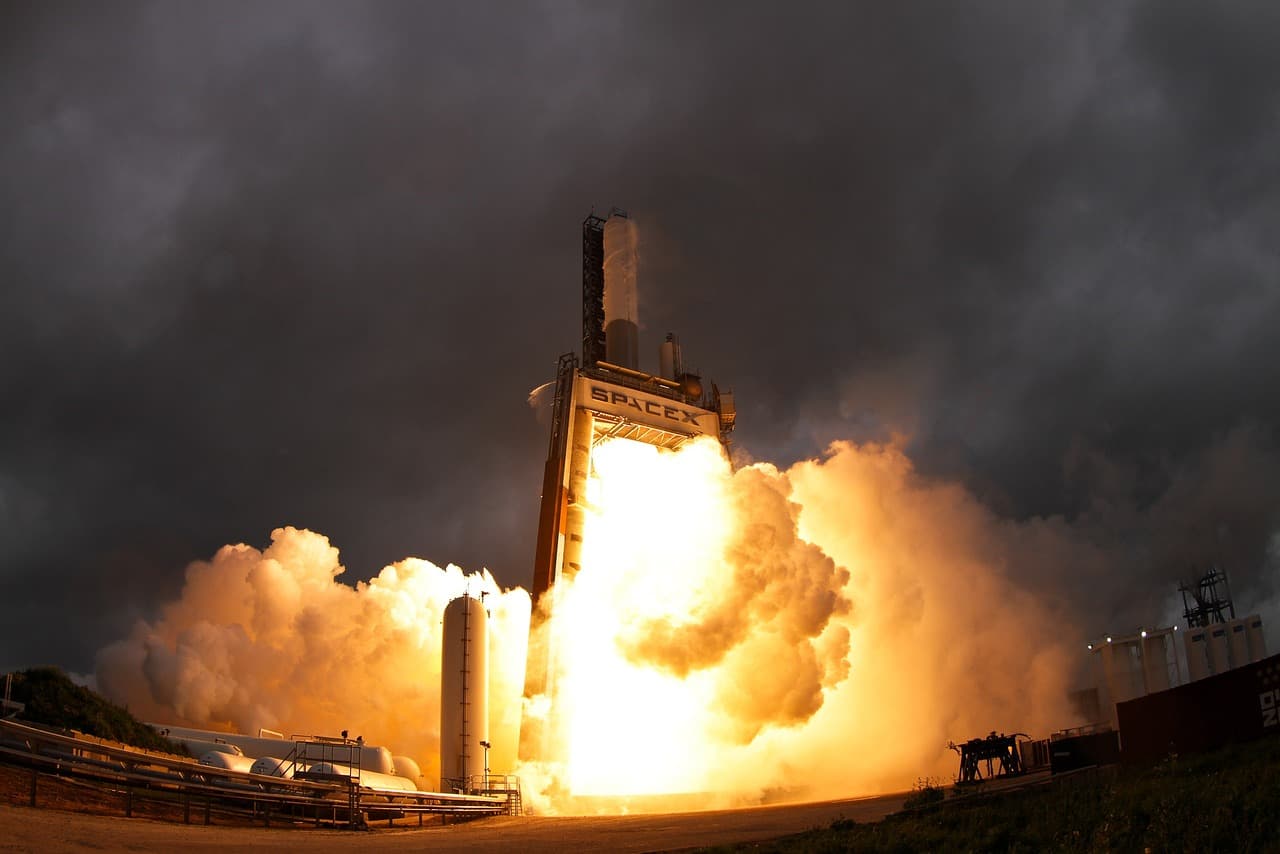
SpaceX's orbital data center strategy represents a calculated architectural pivot designed to justify its unprecedented $1.75 trillion valuation by creating a vertically integrated monopoly in space-based compute infrastructure. The company has reportedly filed confidential paperwork for an initial public offering to raise $75 billion at this valuation, with CEO Elon Musk positioning orbital data centers as central to SpaceX's future. This move comes as terrestrial data centers face mounting opposition across the United States, with 45% of proposed projects encountering significant local resistance according to industry data. For technology executives and investors, this development matters because it signals a fundamental shift in how compute infrastructure will be architected, moving from land-intensive terrestrial models to orbital solutions that could bypass regulatory constraints while creating new technical challenges.
The strategic architecture reveals SpaceX's unique position as both launch provider and satellite operator. Unlike competitors who must rely on third-party launch services, SpaceX controls the entire vertical stack from Earth to orbit. This architectural advantage creates a competitive moat that could justify premium valuation multiples. The company's established Starlink network, generating approximately $10.5 billion in annual revenue, provides the foundational infrastructure and operational experience for scaling orbital data centers. However, this architectural approach introduces significant technical debt in the form of radiation hardening requirements, thermal management challenges, and latency constraints that terrestrial data centers don't face.
Structural Implications of Orbital Compute Architecture
The transition to orbital data centers represents more than just a location change—it's a complete architectural overhaul of compute infrastructure. Traditional data center architecture assumes abundant land, stable power grids, and physical accessibility for maintenance. Orbital architecture must contend with vacuum environments, extreme temperature fluctuations, and radiation exposure that can degrade hardware performance by up to 70% faster than terrestrial equivalents. SpaceX's approach appears to leverage modular satellite-based architecture, where individual satellites function as compute nodes in a distributed orbital network.
This architectural shift creates three critical structural implications. First, it redefines the economics of data center deployment by eliminating land acquisition costs but introducing launch costs of approximately $50 million per heavy payload. Second, it changes the maintenance paradigm from physical access to remote management and redundancy-based reliability. Third, it creates new regulatory architecture requirements for orbital spectrum allocation, space debris management, and international coordination. The technical architecture must also address latency issues—while orbital data centers can provide global coverage, the round-trip signal delay of 0.2-0.5 seconds creates limitations for real-time applications.
Winners and Losers in the New Orbital Architecture
The architectural shift to orbital data centers creates clear winners and losers based on technical capabilities and strategic positioning. SpaceX emerges as the primary winner, leveraging its vertical integration to capture both launch revenue and data center service revenue. The company's confidential IPO filing at $1.75 trillion valuation suggests investors recognize this architectural advantage. Early SpaceX investors stand to gain substantial returns from the $75 billion IPO, while AI/ML companies potentially benefit from access to unique orbital compute capacity that bypasses terrestrial constraints.
The losers in this architectural transition include traditional data center operators who face disruption from orbital alternatives addressing land and energy constraints. Competing launch providers like Blue Origin face architectural disadvantages without SpaceX's integrated satellite network. Terrestrial data center real estate markets face reduced demand for land-intensive expansion, potentially affecting $50 billion in planned developments. Most significantly, skeptical investors risk substantial losses if the orbital data center architecture proves technically infeasible or economically unsustainable at scale.
Second-Order Architectural Effects
The move toward orbital data centers triggers cascading architectural effects across multiple industries. In the semiconductor sector, it creates demand for radiation-hardened processors and specialized cooling systems, potentially driving 80% growth in space-grade chip manufacturing. For cloud providers, it necessitates architectural changes to distributed computing models that account for orbital latency and intermittent connectivity. The energy sector faces architectural implications as orbital data centers could leverage solar power more efficiently than terrestrial counterparts, but require new power transmission architectures.
Regulatory architecture must evolve to address orbital data center operations. Current space law frameworks, developed before commercial orbital infrastructure existed, lack provisions for data sovereignty, orbital debris from failed hardware, and spectrum allocation for orbital-to-ground communications. The architectural challenge extends to cybersecurity—protecting orbital data centers requires new security architectures that account for physical inaccessibility and potential signal interception vulnerabilities. These second-order effects create both risks and opportunities for companies positioned to provide supporting architectural solutions.
Market and Industry Impact Analysis
The orbital data center architecture accelerates the transition from terrestrial to orbital compute infrastructure, creating a new space-based compute market segment projected to reach $170 billion by 2030. This architectural shift forces terrestrial operators to address land and energy constraints more aggressively, potentially driving innovation in high-density computing and renewable energy integration. The market impact extends beyond data centers to adjacent industries including satellite manufacturing, launch services, and ground station networks.
Industry architecture is being reshaped by SpaceX's vertical integration model. Companies pursuing orbital data centers without launch capabilities face architectural dependencies that increase costs and reduce flexibility. The competitive landscape reveals a bifurcation between integrated players like SpaceX and specialized providers focusing on specific architectural components. Market validation comes from startups like Starcloud, which recently raised $170 million at unicorn valuation, indicating investor confidence in the orbital data center architecture despite significant technical challenges.
Executive Action Architecture
Technology executives must architect their response to the orbital data center trend with specific, actionable steps. First, conduct architectural due diligence on orbital compute feasibility for your specific workloads, focusing on latency tolerance and data sovereignty requirements. Second, develop contingency architectures that maintain optionality between terrestrial and orbital solutions, avoiding vendor lock-in during this transitional period. Third, establish cross-functional architecture teams combining space systems expertise with cloud computing knowledge to evaluate orbital opportunities systematically.
The architectural decisions made today will determine competitive positioning for the next decade. Companies that architect early partnerships with orbital providers gain first-mover advantages in understanding the technical constraints and business models. Those that delay risk architectural obsolescence as compute infrastructure evolves beyond terrestrial limitations. The $1.75 trillion valuation question hinges on whether SpaceX can architect orbital data centers at scale—executives must architect their own strategies accordingly.
FAQ
Vertical integration creates monopoly-like control over orbital compute infrastructure, allowing SpaceX to capture both launch and service revenue while bypassing terrestrial constraints.
Radiation hardening, thermal management in vacuum, latency constraints, and remote maintenance requirements create technical debt that could delay implementation by 3-5 years.
It creates disruptive pressure to address land and energy constraints while facing potential obsolescence in premium compute markets where orbital solutions offer unique advantages.
Current space law lacks specific provisions, creating uncertainty around data sovereignty, orbital debris, and spectrum allocation that must be resolved for scalable operations.
Realistic timelines suggest 2028-2030 for initial deployment, with full-scale operations dependent on solving radiation hardening and thermal management challenges.