

SpaceX's Falcon 9 Phase-Out: The Strategic Pivot Reshaping the Launch Industry
SpaceX is deliberately throttling down its Falcon 9 launch cadence to free resources for Starship, triggering a seismic shift in launch geography, competitive dynamics, and government dependency. In 2025, SpaceX conducted 165 Falcon 9 launches, up from 134 in 2024 and 96 in 2023. Yet the company plans only 140–145 Falcon launches in 2026, with President Gwynne Shotwell stating, “This year we’ll still launch a lot, but not as much. And then we’ll tail off our launches as Starship is coming online.” This is not a sign of weakness—it is a calculated reallocation of capital, talent, and infrastructure toward a vehicle that promises to dominate heavy-lift and deep-space missions. For executives, the message is clear: the launch market is entering a new phase where Starship’s capabilities will redefine cost structures, mission profiles, and competitive barriers.
Context: What Happened
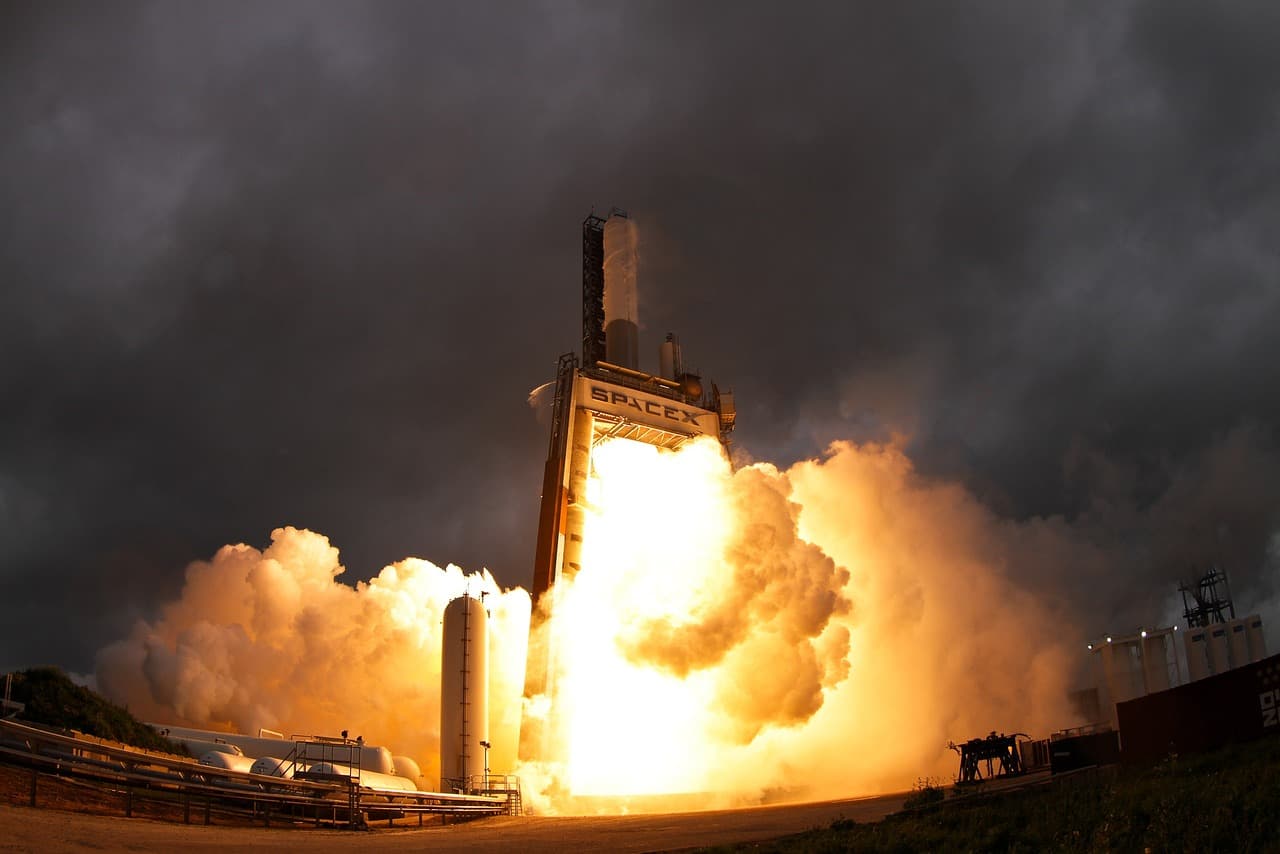
SpaceX has begun moving its most valuable launch assets away from Falcon 9. At Cape Canaveral, Launch Complex-39A is being converted for Starship, removing it from Falcon 9 rotations. The company retired one of its two East Coast droneships, reducing recovery capacity. Meanwhile, Vandenberg Space Force Base in California has become the primary site for Starlink launches, hosting over half of SpaceX’s 2025 launches compared to less than 40% in 2024. The new norm at Cape Canaveral is about one Falcon 9 launch per week, matching 2023 levels. This geographic shift is not temporary—it reflects a deliberate strategy to concentrate Falcon 9 operations on the West Coast while preparing Florida for Starship’s debut.
Strategic Analysis
Why SpaceX Is Reducing Falcon 9 Launches
The Falcon 9 is the most reliable rocket in history, but it has reached its economic ceiling. Starship promises to reduce per-kilogram launch costs by an order of magnitude, enable in-orbit refueling, and support missions that Falcon 9 cannot—such as landing astronauts on the Moon and Mars, deploying next-generation Starlink satellites, and building orbital data centers. By shifting Starlink launches to Vandenberg and slowing Cape Canaveral operations, SpaceX frees up pad infrastructure, engineering talent, and supply chain capacity for Starship production and testing. The retirement of a droneship also signals that SpaceX expects fewer Falcon 9 landings, as Starship’s Super Heavy booster will use a different recovery system.
Geographic Realignment: Winners and Losers
Vandenberg emerges as the big winner. Once a sleepy spaceport with a single launch in 2020, it now hosts more than half of SpaceX’s launches. The Space Force is preparing for launch rates to triple in five years, and Blue Origin is building a New Glenn pad there. Cape Canaveral, while still critical for crewed missions and Falcon Heavy, sees its launch cadence plateau. The shift reduces congestion on the East Coast and aligns with military preferences for polar orbits from California. For companies reliant on Cape Canaveral’s infrastructure—like United Launch Alliance and Relativity Space—the change means less shared range capacity and potentially higher costs.
Starship’s Operational Timeline and Dependencies
SpaceX aims to begin Starship flights from Florida before its new factory at Kennedy Space Center is operational. The company will need multiple Starship pads in Florida and Texas to meet demand from NASA’s Artemis program (which requires numerous refueling launches per lunar mission) and its own Starlink upgrade. The ISS extension to 2032 ensures Falcon 9 remains in service for crew transport, but beyond that, Starship will likely replace it entirely. The Space Force’s reliance on Falcon 9 and Falcon Heavy into the 2030s provides a revenue floor, but Starship’s heavy-lift capability could capture national security launches as well.
Competitive Implications
SpaceX’s pivot creates openings for competitors. Blue Origin’s New Glenn, Stoke Space, Relativity Space, Rocket Lab, and Firefly Aerospace are building new pads at Cape Canaveral, Vandenberg, and Wallops Island. The Space Force’s projection of 500 launches per year from Florida by 2036 suggests room for multiple providers. However, Starship’s scale and cost advantages may force rivals to specialize in medium-lift or niche missions. The acquisition of xAI also hints at a future where SpaceX controls both launch and data processing, integrating Starlink with AI-driven orbital data centers—a vertical integration that competitors cannot easily replicate.
Winners & Losers
Winners: SpaceX (scaling Starship, securing government contracts, vertical integration), Vandenberg Space Force Base (becoming primary launch hub), Space Force (achieving launch rate growth), and Blue Origin (new pad at Vandenberg). Losers: Cape Canaveral spaceport (declining launch share), legacy providers like ULA and Arianespace (struggling to compete on cost and cadence), and ISS partners (dependent on Falcon 9 for crew transport with no backup if Starship delays).
Second-Order Effects
The Falcon 9 phase-out will accelerate the commoditization of medium-lift launch, driving down prices and forcing consolidation among smaller providers. Starship’s refueling capability will enable deep-space missions that were previously impossible, creating new markets for in-space manufacturing and resource extraction. The geographic shift to Vandenberg may also spur West Coast space industry growth, attracting talent and investment away from Florida. Regulatory challenges could arise as SpaceX operates Starbase outside Space Force jurisdiction, potentially leading to new safety standards.
Market / Industry Impact
The global launch market is transitioning from a single-provider, single-site model to a multi-site, multi-vehicle ecosystem. Starship’s heavy-lift capability will disrupt satellite design, enabling larger, more capable payloads. Government demand (NASA, Space Force) will remain a stable revenue source, but commercial demand from Starlink and data centers will drive volume. Investors should watch for Starship’s first operational flights and the pace of pad construction in Florida and Texas.
Executive Action
- Assess supply chain exposure to Cape Canaveral versus Vandenberg; consider relocating logistics if your business depends on East Coast launches.
- Monitor Starship’s development milestones—delays could extend Falcon 9’s lifespan, affecting launch pricing and availability.
- Evaluate partnerships with SpaceX for Starship-based services (e.g., orbital data centers) as a hedge against rising launch costs from competitors.
Why This Matters
SpaceX’s deliberate reduction of Falcon 9 launches is not a retreat—it is a strategic acceleration toward Starship, which will redefine the economics of space access. Executives who ignore this shift risk being locked into legacy launch contracts or missing the next wave of space-enabled business models.
Final Take
SpaceX is executing a textbook disruptive transition: cannibalizing its own successful product before competitors can catch up. The Falcon 9’s phase-out signals that the launch industry’s center of gravity is moving from reliability to scale, from single-use to fully reusable, and from government-dominated to commercial-driven. The winners will be those who align with Starship’s ecosystem; the losers will cling to the past.
Rate the Intelligence Signal
Intelligence FAQ
SpaceX is reallocating resources to Starship, which offers lower per-kg costs and new capabilities like in-orbit refueling. The Falcon 9 reduction is a deliberate strategic pivot, not a capacity issue.
In the short term, Falcon 9 supply constraints may keep prices stable. In the long term, Starship's lower costs will pressure all providers to reduce prices, potentially triggering a price war.
 Spotify
 Apple
Apple Amazon
 YouTube

