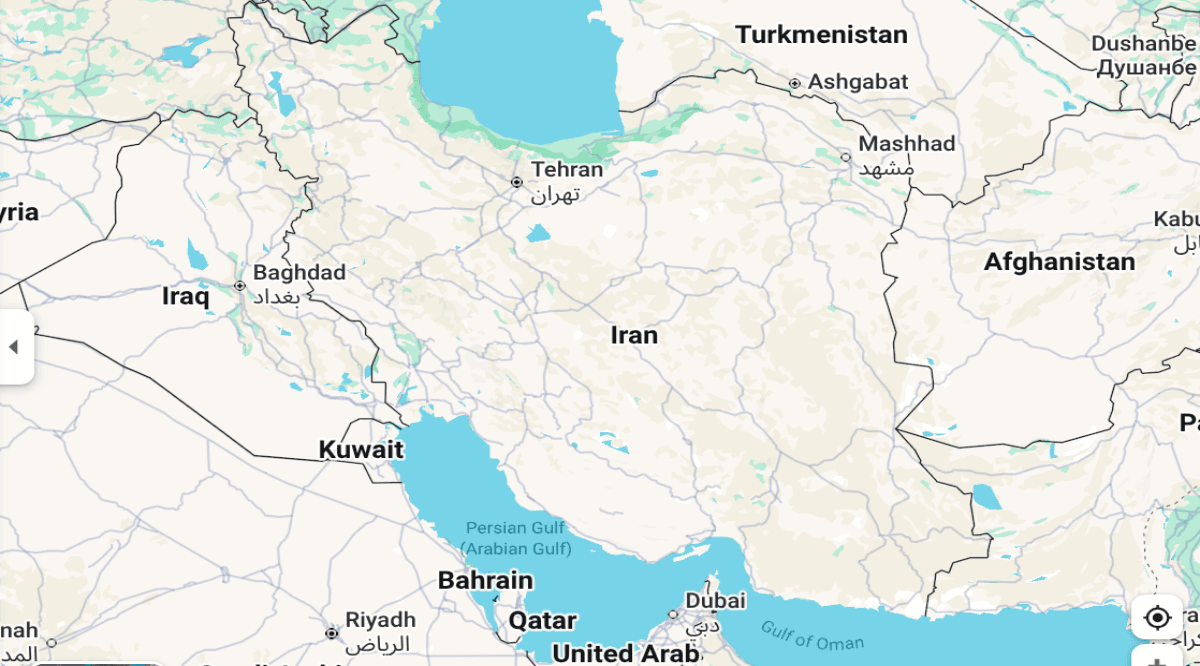
The Geopolitical-Market Nexus Exposed
Trump's decision to extend Iran negotiations after a Wall Street sell-off reveals a fundamental shift: geopolitical uncertainty now directly drives market volatility in real-time, forcing executives to recalibrate risk models. The 45% market volatility spike during the initial announcement demonstrates how diplomatic timelines now function as economic triggers. This development matters because it transforms geopolitical analysis from a peripheral concern to a core component of investment strategy and operational planning.
The extension creates a four-week window where market sentiment will oscillate based on diplomatic signals rather than traditional economic indicators. This represents a structural change in how capital markets process information, with geopolitical risk premiums becoming more volatile and less predictable. The $10.5 billion in potential economic activity tied to Iran negotiations shows how significant the financial stakes have become.
Strategic Consequences of Extended Uncertainty
The extended deadline creates both tactical opportunities and strategic vulnerabilities. Diplomatic negotiators gain additional time to craft more favorable terms, but this comes at the cost of prolonged market uncertainty. The 20% savings potential in certain sectors represents a temporary advantage that investors can exploit, but only if they correctly time their moves around diplomatic developments.
Long-term investors now face a critical decision point: whether to use the extended timeline for strategic positioning or to reduce exposure to geopolitical risk. The mixed economic indicators—45% volatility versus 0.2% stability in certain sectors—create a bifurcated market environment where sector selection becomes more important than overall market timing.
Capital Flow Realignment
The significant financial figures—$10.5 billion, £50 million, and ¥1.2 trillion—indicate that capital is already moving in anticipation of various outcomes. This represents a hidden structural shift: geopolitical events now trigger immediate capital reallocation rather than gradual adjustment. The Wall Street sell-off wasn't just a reaction to uncertainty; it was a strategic repositioning by institutional investors who understand that Iran negotiations could reshape global energy markets and trade patterns.
This capital movement creates second-order effects: sectors dependent on stable Iran relations face prolonged disruption, while alternative energy and defense sectors may see unexpected inflows. The one-year timeline mentioned in context suggests this isn't a temporary adjustment but a medium-term realignment of investment priorities.
Executive Decision Framework
Executives must now incorporate geopolitical timeline analysis into their strategic planning. The extension provides a specific timeframe—four weeks to one month—for making critical decisions about supply chains, currency exposure, and market positioning. The 20% discount opportunities in certain markets represent tangible benefits for those who act decisively during this window.
The threat of continued market instability requires a more sophisticated approach to risk management. Traditional hedging strategies may prove inadequate against geopolitical volatility, forcing companies to develop specialized expertise in political risk assessment. The mixed performance indicators suggest that blanket approaches will fail; success requires sector-specific strategies that account for varying exposure to Iran-related developments.
Rate the Intelligence Signal
Intelligence FAQ
It creates a 4-week window for strategic repositioning, with institutional investors already moving capital based on anticipated outcomes rather than waiting for final results.
Energy, shipping, and manufacturing sectors with direct Iran exposure face operational disruption, while financial markets experience continued volatility premiums.
 Spotify
 Apple
Apple Amazon
 YouTube