The Hidden Fracture in Musk's AI Empire
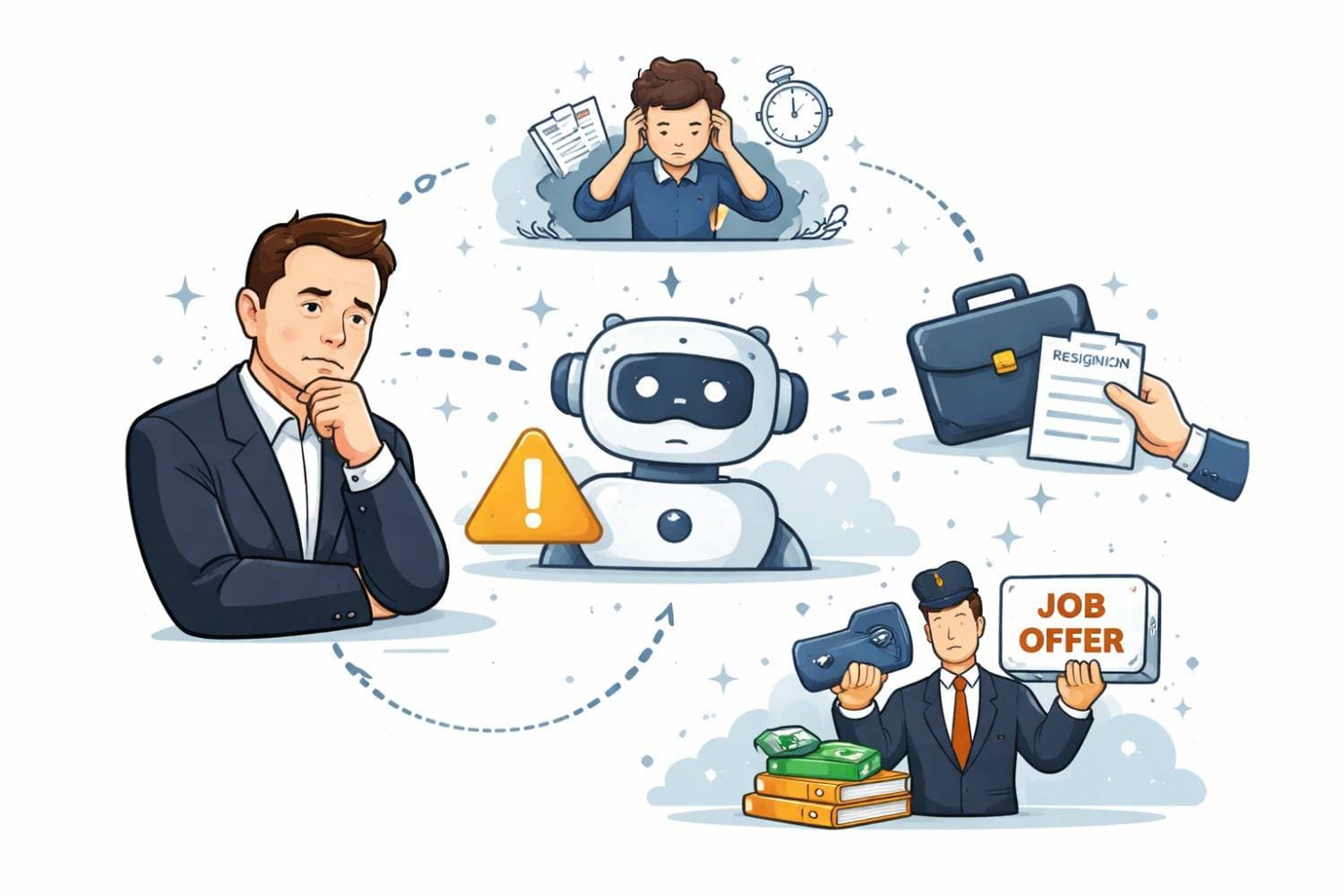
The departure of Manuel Kroiss and Ross Nordeen from xAI represents more than routine executive turnover—it reveals fundamental structural weaknesses in Elon Musk's AI strategy that could undermine his entire technology portfolio. With all 11 original co-founders now gone, xAI faces a critical inflection point where leadership instability threatens to derail its ambitious goals. The $10.5B valuation now carries significantly higher risk as investor confidence erodes and competitors circle for talent acquisition opportunities.
This matters because xAI's success directly impacts the integrated value proposition of Musk's technology ecosystem—SpaceX, X, and Tesla all stand to benefit from or suffer based on xAI's performance. For executives watching this space, the lesson is clear: even visionary leadership cannot compensate for organizational fractures when competing in the hyper-competitive AI sector where talent retention is the ultimate competitive advantage.
Strategic Analysis: The Unraveling of xAI's Foundation
The complete departure of xAI's founding team within such a compressed timeframe indicates systemic issues that extend beyond normal startup growing pains. Musk's recent admission that xAI "was not built right [the] first time around" and is now "being rebuilt from the foundations up" suggests fundamental misalignment between the original vision and current strategic direction. This isn't merely a leadership change—it's a complete organizational reset occurring at the worst possible moment in the AI competitive cycle.
Kroiss and Nordeen's positions as direct reports to Musk with critical operational roles (Kroiss leading the pretraining team, Nordeen serving as Musk's "right-hand operator") means their departure creates immediate capability gaps. Nordeen's background in planning major layoffs at Twitter after Musk's acquisition suggests he brought valuable operational discipline to xAI—exactly the type of expertise needed to scale an AI startup effectively. The loss of this institutional knowledge creates execution risk at a time when xAI needs to accelerate development to compete with OpenAI, Anthropic, and Google's DeepMind.
The timing is particularly problematic given SpaceX's reported plans to go public and the recent corporate restructuring that brought SpaceX, xAI, and X together under one umbrella. This integration was likely intended to create synergies across Musk's technology portfolio, but leadership instability at xAI now threatens to undermine those benefits. Investors evaluating SpaceX's potential IPO will need to factor in xAI's organizational challenges when assessing the combined entity's value proposition.
Winners and Losers in the AI Talent War
The immediate beneficiaries of this leadership exodus are competing AI startups who now have a clear opportunity to recruit experienced talent and capitalize on xAI's perceived instability. Companies like Anthropic, Cohere, and even established players like Google and Microsoft can leverage this uncertainty to strengthen their own teams while potentially gaining competitive intelligence about Musk's AI strategy.
Elon Musk himself represents a complex case—while he gains greater direct control over xAI's direction without co-founder dissent, he faces significant short-term reputation risk and operational disruption. The departure of his entire founding team sends negative signals to both investors and potential recruits about xAI's organizational health and leadership stability.
The clear losers are xAI's remaining employees, who now face increased uncertainty about company direction and potential cultural disruption from leadership changes. xAI investors face valuation risk to their $10.5B investment as leadership instability creates questions about execution capability and strategic coherence. Kroiss and Nordeen themselves lose equity and influence in what could have been a generational AI opportunity at a critical growth stage.
Second-Order Effects: The Ripple Through Musk's Ecosystem
The most significant second-order effect will be on talent mobility across the entire AI sector. High-profile departures from a Musk-backed venture signal to other AI professionals that even the most well-funded and high-profile startups face organizational challenges. This could accelerate talent movement as professionals seek more stable environments, potentially driving up compensation costs across the industry.
Within Musk's own ecosystem, the xAI leadership vacuum creates integration challenges with SpaceX and X. The promised synergies between these entities—particularly in areas like AI-powered content moderation for X or advanced analytics for SpaceX—now face implementation delays as new leadership establishes itself and rebuilds organizational momentum.
Investor confidence represents another critical second-order effect. The $10.5B valuation now carries significantly higher risk premiums, which could impact future funding rounds and potentially affect SpaceX's valuation as the companies become more integrated. Venture capital firms and institutional investors will likely demand greater governance oversight and clearer succession planning before committing additional capital.
Market and Industry Impact
The AI talent market will experience immediate effects from this development. Compensation expectations for senior AI leadership roles will likely increase as companies compete for the limited pool of executives with experience scaling AI startups. The perception of instability at high-profile ventures like xAI could make it more difficult for other AI startups to attract top talent, potentially slowing innovation across the sector.
Competitive dynamics will shift as xAI's development timeline likely extends due to leadership transition. This creates a window of opportunity for competitors to advance their own AI capabilities while xAI rebuilds its organizational foundation. The race to develop the next generation of AI models becomes even more critical as xAI's temporary setback gives competitors breathing room.
Industry structure may also be affected as investors become more cautious about AI startups with concentrated leadership risk. We may see increased demand for distributed leadership models and stronger governance structures in AI ventures, potentially slowing the pace of new company formation but creating more sustainable organizations in the long term.
Executive Action: What Leaders Must Do Now
First, technology executives should immediately assess their own AI talent retention strategies. The xAI situation demonstrates that even visionary leadership and substantial funding cannot guarantee organizational stability. Companies should review compensation structures, career progression pathways, and cultural factors that influence retention in the competitive AI talent market.
Second, investors and board members must demand clearer succession planning and leadership development programs from AI startups. The concentration of knowledge and decision-making authority in founding teams creates unacceptable risk in a sector where intellectual capital is the primary asset. Governance structures need to evolve to address this vulnerability.
Third, competitors should develop targeted talent acquisition strategies that leverage xAI's current instability while maintaining ethical recruitment practices. The opportunity to strengthen technical teams with experienced AI professionals represents a significant competitive advantage that could accelerate development timelines and improve product quality.
Rate the Intelligence Signal
Intelligence FAQ
It demonstrates a pattern of organizational restructuring that prioritizes direct control over collaborative leadership, creating vulnerability in talent-dependent sectors like AI.
Leadership transition creates immediate execution delays, giving competitors a 6-12 month window to advance their capabilities while xAI rebuilds its organizational foundation.
Focus on distributed leadership models, clear succession planning, and retention metrics—not just technical capabilities or funding levels.
Leadership instability at xAI creates integration friction and delays promised synergies, potentially affecting SpaceX's valuation ahead of its reported IPO plans.
 Spotify
 Apple
Apple Amazon
 YouTube