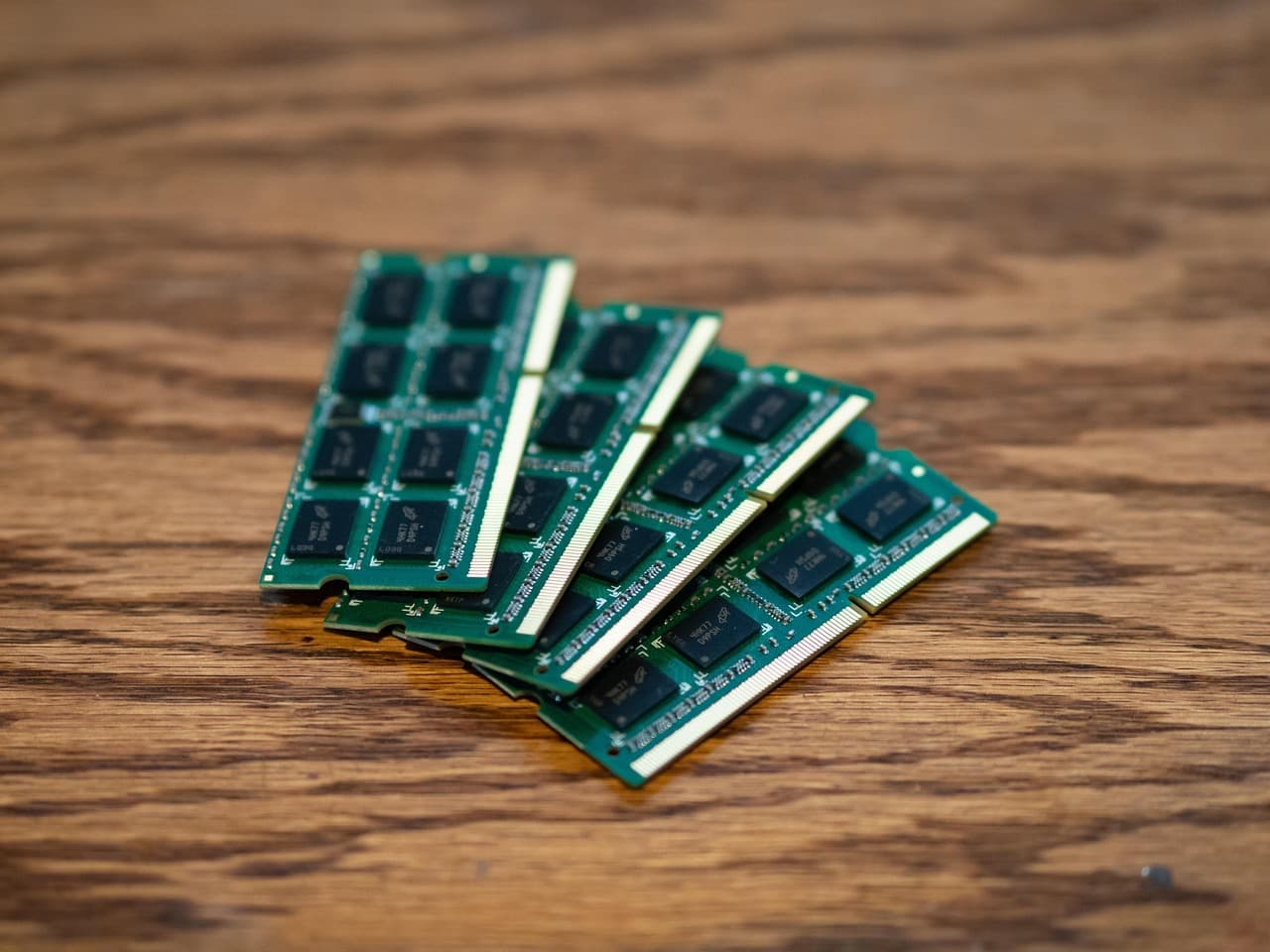
Apple has solved the on-device AI memory wall. At WWDC26, the company announced AFM 3 Core Advanced, a 20-billion-parameter model that stores weights in NAND flash instead of DRAM. This architecture, developed with Google, allows expert routing per prompt rather than per token, activating 1B to 4B parameters per task. For enterprise architects, this is the first viable path to deploying capable AI agents entirely on device—without sacrificing privacy or latency.
Why this matters for your bottom line: The DRAM constraint has forced a binary choice between cloud-dependent models and weak on-device ones. Apple’s flash-based approach eliminates that trade-off, enabling complex agentic workloads on consumer hardware. Regulated industries—healthcare, finance, defense—can now evaluate local AI that meets compliance requirements without cloud round-trips.
How the architecture works
AFM 3 Core Advanced stores its full 20B parameter set in NAND flash. A small model predicts which experts to load into DRAM based on the prompt. This once-per-query routing avoids the bandwidth bottleneck of token-by-token expert switching. Active parameters scale from 1B to 4B, depending on task complexity. Apple calls this Instruction-Following Pruning (IFP).
As Awni Hannun, former Apple researcher now at Anthropic, noted: “You can’t put 20B parameters in RAM at any reasonable precision. To make it work they are using pretty exotic architecture by today’s standards.”
Strategic consequences
Who gains
Apple strengthens its ecosystem lock-in. Developers building agentic apps for iPhone, iPad, and Mac now have a 20B parameter local model—far beyond the 7B-8B ceiling of DRAM-bound competitors. This could accelerate adoption of Apple Intelligence and drive hardware upgrades.
Google Cloud wins a marquee client for Nvidia GPU infrastructure. The server-side AFM 3 Cloud Pro runs on Google Cloud, reinforcing Google’s position in enterprise AI cloud services.
Nvidia benefits from increased GPU demand via Google Cloud for Apple’s server-side inference.
Apple users gain faster, more private AI agents with reduced cloud dependency.
Who loses
Qualcomm faces reduced relevance. Apple’s custom on-device architecture bypasses Qualcomm’s AI accelerators, potentially diminishing Qualcomm’s role in mobile AI.
Samsung risks losing competitive edge if Apple’s on-device AI proves superior. Samsung’s Galaxy AI relies on cloud and smaller on-device models.
OpenAI and Microsoft may see reduced demand for cloud-based AI services if Apple’s on-device agents handle tasks that previously required cloud round-trips.
Second-order effects
Enterprise architecture shifts: The private/cloud boundary becomes an architectural decision, not a default. Simpler requests stay on-device; complex tasks route to AFM 3 Cloud Pro. However, Apple has not disclosed when requests offload or whether that routing is visible to developers—a compliance gap for regulated industries.
Vendor lock-in risk: The server-side tier depends on Google Cloud and Nvidia GPUs. While Private Cloud Compute guarantees data privacy, it does not eliminate Google dependency. Enterprises must assess geopolitical and contractual risks.
Competitive response: Qualcomm, Samsung, and Google will likely accelerate their own flash-based architectures. Expect a wave of NAND-stored models within 12-18 months.
Market impact
The shift from DRAM to NAND for model storage redefines mobile AI architecture. Large models become feasible on device, reducing reliance on cloud connectivity. This could disrupt the cloud AI market, particularly for inference workloads that can run locally.
Apple’s AFM 3 family includes five models: two on-device (AFM 3 Core and Core Advanced) and three server-based (including AFM 3 Cloud Pro). The server models run on Nvidia GPUs in Google Cloud. Apple has promised a full technical report with benchmarks later this summer.
Executive action
- Evaluate on-device AI for regulated workloads: If your organization requires data residency or low latency, begin prototyping with AFM 3 Core Advanced once benchmarks are released.
- Assess Google Cloud dependency: Map your AI pipeline’s exposure to Google Cloud and Nvidia. Develop contingency plans for vendor lock-in.
- Monitor competitive responses: Track Qualcomm, Samsung, and Google for similar flash-based architectures. The window for first-mover advantage is narrow.
Source: VentureBeat
FAQ
It stores weights in NAND flash instead of DRAM, using a per-prompt routing mechanism to load only needed experts into DRAM.
Enterprises can deploy capable AI agents on device without cloud round-trips, improving privacy and latency, but must assess Google Cloud dependency for server-side tasks.