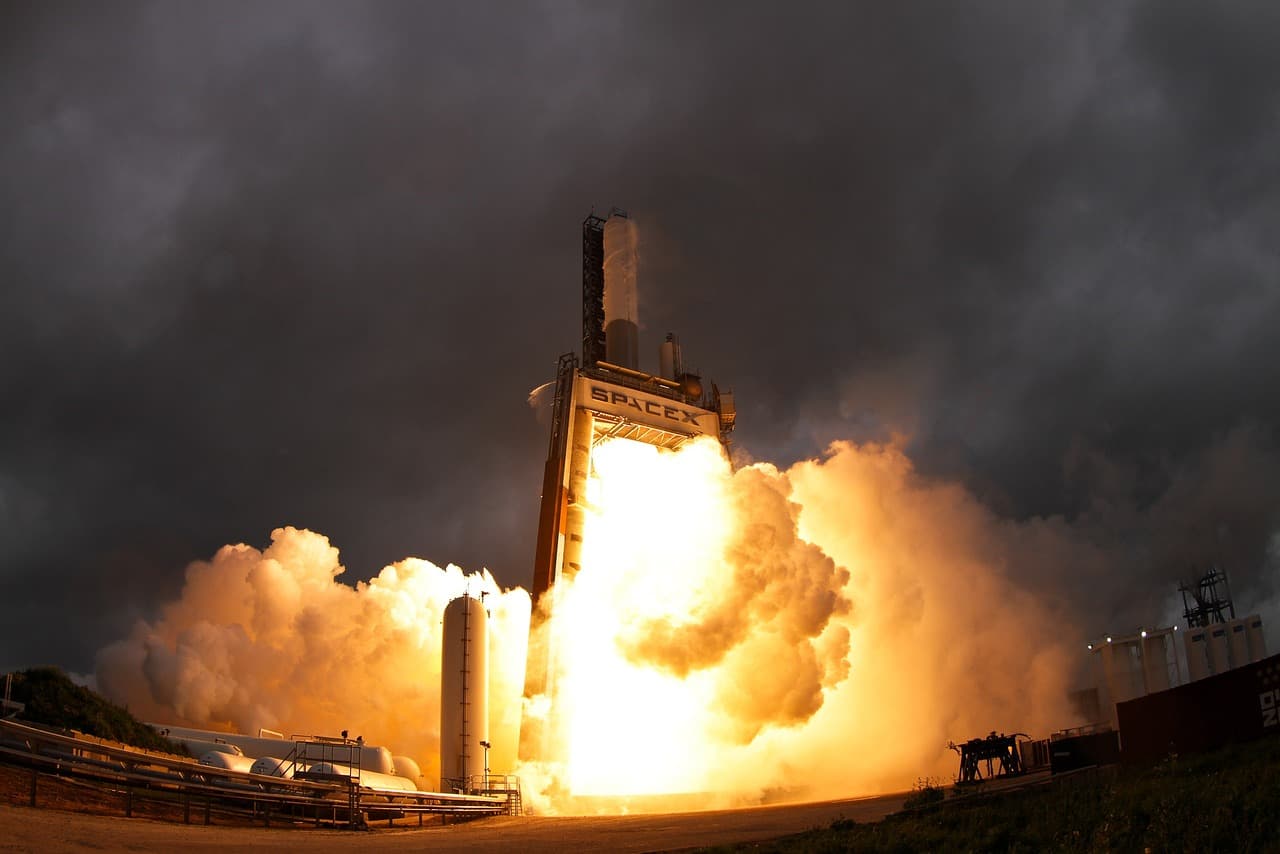
What Happened
On a Florida test stand, Blue Origin's New Glenn rocket exploded during a ground test, sending a fireball into the sky and scattering debris across the launch site. The incident, first reported by TechRepublic, leaves crews assessing damage, investigating the root cause, and calculating the cost of yet another delay in the company's heavy-lift launch vehicle program.
Strategic Analysis: The Real Winners and Losers
The explosion is not just a technical failure—it is a strategic inflection point. Blue Origin, already years behind schedule and billions over budget, now faces a prolonged recovery. The immediate consequence is a shift in market confidence. Customers with launch contracts on New Glenn—including satellite operators and NASA—must now reconsider their timelines. Some will defect to SpaceX's Falcon 9 or Falcon Heavy, which have proven reliability. Others may turn to United Launch Alliance's Vulcan Centaur, which is nearing operational status. The explosion accelerates the consolidation of the launch market around a few proven providers, leaving Blue Origin on the outside looking in.
For Jeff Bezos, the setback is personal and financial. He has poured billions into Blue Origin, but the company has yet to deliver a single orbital launch. The New Glenn explosion raises questions about his leadership and the company's engineering culture. Unlike SpaceX, which iterates rapidly through failures, Blue Origin has been cautious—but this explosion suggests that caution has not eliminated risk. The company's reputation for reliability, already tarnished by delays, now suffers a direct hit.
Winners & Losers
Winners
- SpaceX: Elon Musk's company is the clear beneficiary. Every Blue Origin delay strengthens SpaceX's grip on the commercial launch market. With a backlog of over 100 missions, SpaceX can absorb additional demand without breaking stride.
- United Launch Alliance: ULA's Vulcan Centaur, designed to replace the Atlas V, now looks more attractive to customers seeking a second source. The explosion may accelerate ULA's certification for national security launches.
- Relativity Space and Rocket Lab: Smaller launch providers targeting medium-lift and small-lift markets may see increased interest from customers who want to diversify away from Blue Origin.
Losers
- Blue Origin: The company loses credibility, time, and money. The explosion will delay New Glenn's first launch by at least 12–18 months, pushing revenue generation further into the future.
- Jeff Bezos: As the sole owner, Bezos bears the financial burden. More importantly, his reputation as a visionary builder takes a hit. Investors and partners may question his judgment.
- Customers with New Glenn contracts: Companies like Eutelsat, Telesat, and Amazon (Project Kuiper) now face launch delays. Amazon, in particular, may need to accelerate its use of other providers to meet its broadband constellation timeline.
Second-Order Effects
The explosion will trigger a cascade of strategic moves. First, expect Blue Origin to conduct a thorough internal review, likely leading to leadership changes. Second, the incident will intensify regulatory scrutiny of ground test safety, potentially slowing down other companies' test programs. Third, the U.S. Space Force and NASA will reassess their reliance on Blue Origin for future missions, potentially shifting contracts to SpaceX or ULA. Finally, the explosion may prompt a wave of consolidation in the space industry, as smaller players struggle to compete with the deep pockets of SpaceX and ULA.
Market / Industry Impact
The launch services market is already tight, with demand outstripping supply. The New Glenn explosion tightens it further. Launch prices, which have been declining due to SpaceX's reusable rockets, may stabilize or even rise as customers scramble for capacity. Insurance premiums for launch vehicles will likely increase, raising costs for all operators. The incident also reinforces the high-risk nature of space launch, reminding investors that the sector is not yet a mature industry.
Executive Action
- Reassess launch contracts: If your company has a contract with Blue Origin, begin contingency planning immediately. Identify alternative providers and negotiate backup slots.
- Monitor insurance markets: The explosion will likely lead to higher premiums for launch insurance. Lock in rates now if possible.
- Watch for acquisition targets: Blue Origin's setback may make it a target for a larger aerospace firm. Alternatively, it may seek to acquire smaller technology companies to accelerate its recovery.
Why This Matters
The New Glenn explosion is not just a technical mishap—it is a strategic signal that the space launch market is consolidating around a few reliable players. For executives in telecommunications, defense, and logistics, this means fewer options, higher costs, and longer timelines. Acting now to secure launch capacity is not optional; it is a competitive necessity.
Final Take
Blue Origin's explosion is a self-inflicted wound that reshapes the competitive landscape. SpaceX and ULA are the immediate winners, but the long-term impact will be felt across the entire space industry. Bezos must decide whether to double down or pivot. For everyone else, the message is clear: in space, reliability is the only currency that matters.
Rate the Intelligence Signal
Intelligence FAQ
The exact cause is under investigation, but the explosion occurred during a ground test, indicating a failure in the rocket's propulsion or structural systems.
The explosion will delay New Glenn's first orbital launch by at least 12–18 months, pushing it to 2027 or later.
 Spotify
 Apple
Apple Amazon
 YouTube